
Romanian National Bank: Foreign Investments Up To 21%

According to the Romanian National Bank, the first half of 2022 recorded a 21% growth in foreign direct investments in Romania.
Comparatively to the same period in the previous year, the current account deficit for the balance of payments increased to EUR 12,298 million from January to June 2022. The breakdown shows a EUR 487 million increase in the services surplus, a EUR 1,349 million increase in the primary income deficit, and a EUR 44 million decline in the rest on secondary income. The trade-related debt climbed by 4,189 million euros.
A total of 4,379 million euros were invested directly by non-residents in Romania from January to June 2021 (up from 3,605 million), with equity (including the expected net reinvestment of earnings) and intercompany lending recording net values of 3,115 and 1,264 million euros, respectively.
According to Valahia News, between January and June 2022, the total amount of external debt climbed by EUR 2,645 million. At the end of June 2022, the long-term foreign debt stood at EUR 93,691 billion (68.3% of total external debt), a decrease of 3.6% from the previous year. Short-term external debt increased by 16.3% from 2021 to EUR 43,571 million, or 31.7% of total external debt.
The long-term external debt servicing ratio from January to June 2022 was 15.5%, compared to 16.4% in 2021. At the end of June 2022, the import cover for goods and services was 4.3 months, down from 4.9 months at the end of 2021.
The foreign exchange reserves of the National Bank of Romania were 76.4% of its short-term external debt by remaining maturity at the end of June 2022, down from 81.9% at the end of 2021.
- Published in News
New Ambassador of Israel to Romania
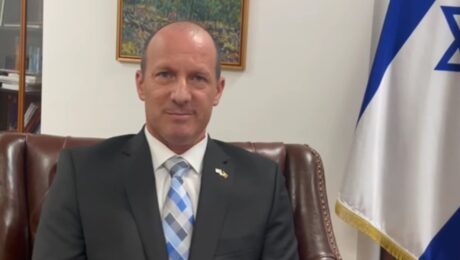
The new State of Israel’s representative in Romania is the diplomat Reuven Azar. He arrived in Bucharest after David Saranga’s mandate to the country ended.
Career diplomat Reuven Azar most recently headed the Israel-US-China working group at the Israeli Foreign Ministry. From September 2021 to August 2022, Azar was the foreign policy advisor to the Prime Minister of the Government of Israel and the deputy national security and foreign policy adviser to the National Security Council.
From 2014 to 2018, Reuven Azar held the position of deputy ambassador to the United States. Prior to this position, he oversaw the Israeli Foreign Ministry’s Middle East Research Division while serving as the deputy ambassador to Jordan in Amman.
According to Valahia News, during his activity, the diplomat has worked with cooperation and negotiating issues with the Palestinian Authority. In addition, he served as the director of the Israeli Embassy’s Economic Mission in Cairo, Egypt (1996–2000), and a political affairs advisor in Washington, USA, for four years (2003-2006).
Reuven Azar is fluent in English, Spanish, and Arabic and holds a master’s degree in international affairs from the Hebrew University of Jerusalem. He is also currently studying Romanian.
- Published in News
Oxford Analytica: President Klaus Johannis Deteriorates Democracy in Romania
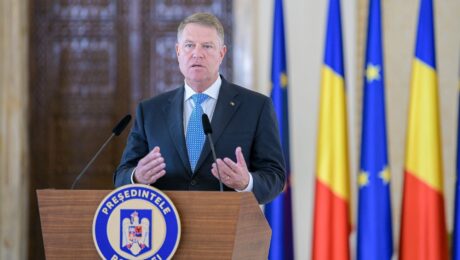
President Klaus Johannis is weakening Romania’s pluralist democracy. The anti-democratic actions taken by the president of Romania during his administration are highlighted in recent research by the British think tank Oxford Analytica.
The report’s authors claim that Klaus Johannis’s standing in society has significantly declined.
Johannis speaks little, and his public appearances have steadily decreased. His advisors stay out of the public eye and are believed to come from the business and intelligence world. (…) President Klaus Johannis’ popularity is now in freefall, as his attempt to reduce the influence of Parliament by allowing the purge of anti-corruption judges and bringing military figures into politics seems to be backfiring. His efforts in 2021 to forge a coalition between two typically rival parties that hold a parliamentary majority have undermined competitive politics and scrutiny of government actions.
Oxford Analytica
According to Valahia News, the attitude of President Klaus Iohannis toward the armed forces and intelligence agencies raises questions about the viability of democracy in Romania. The study focuses on the PNL-PSD (National Liberal Party and Social Democratic Party) case, in which the president’s involvement in severing the alliance between the PNL and USR (Save Romania Union) and forging the coalition between the PNL and PSD—two typically rival parties—which holds the majority of seats in Parliament—was responsible for the rise in corruption in Romania. The data also shows that his attempts weakened control over government operations and competitive policy.
President Klaus Johannis renounces his role as a mediator between state bodies and between the state and society. Fears are growing that a disorderly, sometimes chaotic, yet identity-pluralist system is being replaced by a monolithic version where corruption and inefficiency continue to thrive but without meaningful checks and balances.
Oxford Analytica
According to experts, his ambition to lessen the power of the parliament, permit the removal of judges who investigate corruption cases, and involve military leaders in politics raises concerns about Romania’s democracy.
The research included several crucial subjects, including the army’s and the secret services’ strong influence on Klaus Johannis and Nicolae Ciuca’s government; abandoning all reforms; ending the battle against corruption; intimidating anti-corruption judges; and buying media.
Oxford Analytica claims that Romania’s legal troubles could result in large financial cuts from the EU and that Schengen membership is „unlikely” to occur. British academics also claim that Romania wants to bolster its secret services to keep an eye on international investments there. The analysis gives the legislative proposals about the secret services a lot of attention and shows that the drafts were developed by intelligence service personnel (a problematic legal act) with the knowledge of the President’s and Prime Minister’s offices.
Photo Source: Klaus Johannis Facebook
- Published in News
Uber Files: Broken Laws and Secret Lobby with the Government

Secret communications within Uber, the American behemoth that has changed passenger transportation worldwide, expose illegal expansion strategies into other markets.
Recent events revealed a big scandal regarding the Uber Company. The Guardian revealed secret documents on how tech giant Uber broke the law, conned the police, took advantage of violence against drivers, and clandestinely lobbied governments during its ambitious global development.
In order to operate the powerful machinery of policymakers, the firm has spent a large quantity of money to hire an army of outside consultants.
More than 100 politicians and decision-makers from 17 different countries, including Emmanuel Macron and Joe Biden, as well as members of the European Parliament and European Commission representatives, were met by Uber representatives between 2014 and 2016. Representatives of Uber sought political backing at the highest levels in Romania as well.
Uber has „collaborated” with many top politicians in Romania to change legislation. Emails from the Uber office in Romania identifying the lawmakers who need to be contacted were included in the records.
Lobbying in Romania
In Romania, professional lobbying is just getting started, but like everywhere else, the largest volume of influencing activity is made by trade associations, corporations, non-governmental organizations (NGOs), civil society, syndicates, employer unions, think tanks, lawyers, and other individuals and groups. The law governing lobbying in Romania was drafted there. The legislative initiative defines lobbying as „any contact person organized and structured to exert influence on public representatives in the interest of a client.” Controlling lobbying activities is a prominent aspect of Romania’s political process and is a constitutionally protected right.
However, Uber wanted to impose the cab-hailing service in Romania and worldwide, even if it meant breaking the law and going against taxi rules.
The data reveals how Uber attempted to win back support in Romania by covertly contacting political figures and high-position leaders.
About the Uber Files investigation in Romania
Uber has been touted as a leader in the digital revolution, yet it has turned to outdated methods to win over powerful politicians.
Since 2015, when Uber started operating through a subsidiary in Romania, Uber has managed to amend the law on the prohibition of passenger transport for a fee without a taxi license into the regulation of all passenger transport operations urban-type.
According to a Rise Project investigation, the man who could ensure the connection between Uber and the political area was Peter Imre, who died in the meantime. Peter Imre was the director of Adevarul Holding and an influential local consultant with multiple political connections in Romania.
Through Peter Imre, Uber was able to appeal to the Minister of Transport Ioan Rus, with Iulian Matache, Secretary of State in the Ministry of Transport, Mircea Toader, the Vice President of the Transport Committee in Parliament, responsible for amendments to the taxi law, Catalin Popescu-Tariceanu, Senate President, Bogdan Chiritoiu, the president of the Competition Council, Sorin Grindeanu, the minister for the Information Society, and many others, to convince them to appoint a parliamentarian from each party to introduce the legislative changes that Uber needed.
In 2015, as the local cab faced growing customer dissatisfaction and piracy, Uber entered the contest to dominate the Romanian market. When Uber’s operations in Romania were not regulated, taxi drivers began to demonstrate, and some professional associations filed lawsuits for unfair competition.
At the moment, the Uber files case is under investigation, it is not known who will be prosecuted, but according to the journalists, there are many charges in high positions.
- Published in News
Romanian Foreign Investors Against Removing The Single Tax Rate

Numerous organizations that unite American, French, German, and Romanian investors urge the Government to preserve a single tax and reinstate the tax system in order to promote economic growth.
In the context of the Social Democratic Party’s demands that the Government rethink its budgetary policy and give up the single quota, the major organizations in the business environment are opposed to removing the single tax, considering it a simple tax system and essential for economic growth.
The business environment also suggests: increasing tax collection and combating tax evasion through harsher sanctions and controls in areas where problems are identified; reevaluating the framework in which microenterprises and PFAs are used in Romania.
As long as they are used in good faith, in a truly entrepreneurial manner, and not to conceal employment arrangements, these are advantageous and acceptable forms of organization.
Foreign Investors Council, press release
Identifying the key industries that the Government wants to promote while taking into account Romania’s interest and the medium- and long-term perspective, relocating the tax system to stimulate work, bring black and gray work to the surface, decrease employee departure, and bring Romanians abroad home are other recommendations (boosting the export of high value-added goods and services can help reduce the trade deficit).
At the same time, the economic climate views it as essential to make any change to public policies after transparent engagement with all parties involved. To establish the groundwork for a long-term, transparent, digital, and predictable tax system, the business community also affirms its openness and willingness to communicate with the authorities.
The recommendations come from the Council of Foreign Investors (FIC), the American Chamber of Commerce in Romania (AmCham), the French Chamber of Commerce in Romania (CCIFER), the Romanian-German Chamber of Commerce and Industry (AHK), the CONCORDIA Employers’ Confederation, the Association of Foreigners Romanian Business Leaders (RBL), Romanian-British Chamber of Commerce (NRCC), Romanian-British Chamber of Commerce (BRCC), Hellenic-Romanian Bilateral Chamber of Commerce (HRCC), Belgian Chamber of Commerce, Luxembourg, Romania and Moldova (BEROCC).
- Published in News
New President of the Constitutional Court Elected

On June 11, Marian Enache was elected Constitutional Court (CCR) president. The vote was held in private after the new CCR judges took their oath before Romania’s president, according to a press release from the organization.
Mihaela Ciochină, Laura-Iuliana Scântei, and Bogdan Licu, the three judges of the Constitutional Court (CCR), were sworn in in the Cotroceni Palace. They have a nine-year term in office.
I wish the new constitutional judges much success. Congratulations, and I want you to do as you swore. It is a job of great responsibility, and I am convinced you will do it successfully. Likewise, I wish a lot of success to the constitutional judges who continue their mandate. Together, I want you to ensure compliance with the Constitution and be a balancing factor in Romanian society.
Klaus Iohannis, Romania’s President
This choice is controversial because of the history of the current president. So, who is Marian Enache?
Marian Enache served in many roles, including deputy, presidential adviser, ambassador, and judge.
Marian Enache (67 years old) is a familiar face in the local political arena, having been elected representative of Vaslui on the National Salvation Front’s lists in the May 20, 1990 elections. Then, from 1996 to 2000, and again from 2012 to 2016, Enache served in Parliament as a deputy.
Marian Enache served in many capacities, including deputy, presidential adviser, ambassador, and judge.
During his political career, Enache has been a member of five parties.
Marian Enache served as a deputy, presidential adviser, ambassador, and judge in the United States.
In 1993, he was appointed Romania’s ambassador to the Republic of Moldova, serving as a prezidențial adviser on legal issues to President Ion Iliescu. His career was shaken by a significant controversy in 2009 regarding his ties to the communist police. Marian Enache had a network file at the time, according to the National Council for the Study of Security Archives, but the file no longer exists in the CNSAS archives.
Judge Marian Enache earns about EUR 14,150.00 (70,000 lei) every month.
Marian Enache’s estate consists of four plots of land: three in Gorgota commune (Prahova county), each measuring 2,238 square meters, 2,288 square meters, and 1,800 square meters, and one in Corbeanca commune (Ilfov county), measuring 1,116 square meters.
Enache additionally receives EUR 19,500.00 (96,936 lei) annually from the Chamber of Deputies under the heading of old-age allowance. Enache, the prominent character in Vaslui during the December 1989 Revolution, obtained the indemnification of a revolutionary until recently, which does not appear in the judge’s most recent declaration of fortune.
- Published in News
President Emmanuel Macron Visits Romania
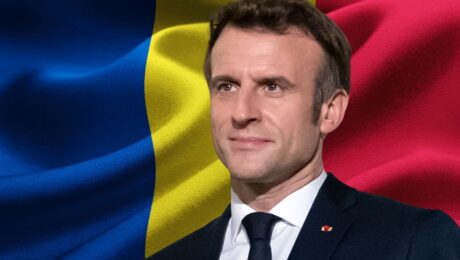
The French President, Emmanuel Macron, will visit Romania at the military Base 57, Mihail Kogalniceanu in Constanta, on June 14.
At Mihail Kogălniceanu’s 57th Base, which oversees a NATO fighting force, France has some 500 soldiers and a missile system. On June 15, Macron will pay them a visit at the Military Base before travelling to Chisinau, the capital of the Republic of Moldova.
At the Mihail Kogalcineanu base near Constanta, Romania’s main Black Sea port, which has become extremely important since the start of the war, Defense Minister Sébastien Lecornu will be welcomed with Foreign Minister Catherine Colonna.
To strengthen NATO’s „position of deterrence and defence on Europe’s eastern flank,” the French president will be greeted by Romanian Prime Minister Nicolae Ciuca and meet with representatives of the Aigle mission. In the nation, France has constructed a state-of-the-art ground-to-air defence system.
According to Valahia New, president Emmanuel Macron will deliver a solid commitment to NATO allies and European partners after Romanian President Klaus Johannis visit the NATO base on June 15.
Since Jacques Chirac visited Romania in 1998, Emmanuel Macron has been the second French president to visit Romania. The president said that the country most impacted by Russia’s invasion of Ukraine, with which it shares a border, will get „direct solidarity (from) France,” the president said. Additionally, France is providing material and financial support to the Republic of Moldova, which has demonstrated „exceptional solidarity” by accepting nearly 480,000 Ukrainian migrants and the remaining 80,000.
According to French officials, the president of France’s visit purpose to Romania and the Republic of Moldova is to show his support for those nations who are the most impacted by the situation in Ukraine.
- Published in News
Joe Biden Appoints Kathleen Ann Kavalec as Ambassador to Romania

Joe Biden announced his intention to nominate Kathleen Ann Kavalec as the United States’ ambassador extraordinary and plenary to Romania. This is the first time an American administration has appointed a woman as ambassador to Romania.
According to a White House press release, Kathleen Ann Kavalec is a career member of the Senior Foreign Service with the rank of Minister-Counselor who has been on detail from the Department of State since 2019 as the Head of Mission at the Organization for Security and Cooperation in Europe (OSCE) Mission to Bosnia and Herzegovina.
She previously worked as the State Department’s Deputy Assistant Secretary for European and Eurasian Affairs. Kavalec previously served as the Director of the Office of Russian Affairs and the Deputy Chief of Mission of the United States UNESCO Mission in Paris, France. As Deputy Coordinator for Assistance in the European Bureau and Director for Conflict Prevention in the Coordinator’s Office for Reconstruction and Stabilization, Kavalec oversaw significant U.S. foreign assistance programs.
As mentioned by Valahia News, Kavalec has extensive experience in this region of Europe, having served as Cultural Affairs Officer at the U.S. Embassy in Bucharest, Romania, Political Counselor at the U.S. Embassy in Kyiv, Ukraine, and Political Officer at the U.S. Embassy in Moscow, Russia (twice). She worked in Washington as a Legislative Management Officer in the Bureau of Legislative Affairs and as the Director of the Economic Unit in the Office of the Coordinator for Assistance to the Newly Independent States. Kavalec, a California native, received an A.B. in Political Science from the University of California, Berkeley, and a Master of Science in Foreign Service from Georgetown University in Washington, D.C. Kavalec has received numerous State Department honours, including the Presidential Rank Award.
According to the press release, she is fluent in Romanian, Spanish, Portuguese, French, and Russian.
After the Capitol riot, the former U.S. ambassador to Romania, HE Adrian Zuckerman, was forced to resign before the end of his term in January 2021.
After auditions, Congress will vote on and approve the nomination.
- Published in News
Romanian Prime Minister and Turkish Defense Minister Discussed Regional Security Issues
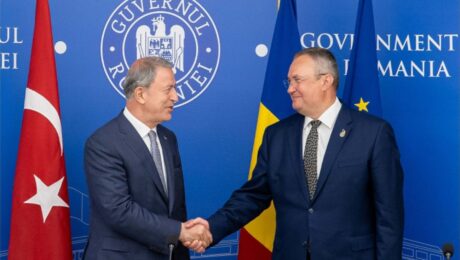
Huluşi Akar, Minister of Defense of the Republic of Turkey, and Prime Minister Nicolae-Ionel Ciuca met at Victoria Palace in Bucharest to discuss the importance of the bilateral relationship limited to the Strategic Partnership, close economic cooperation, and shared concerns about regional security and the Black Sea.
According to Valahia News, the prime minister addressed the Ukrainian conflict and condemned the illegal, unprovoked, and unacceptable actions on the ground. The Prime Minister also directly connected the Black Sea situation and NATO’s need to include the Black Sea as a strategic interest region in the future Strategic Concept. The framework for energy cooperation was also discussed, as was Turkey’s role in transiting necessary amounts of gas to Romania, Moldova, and Ukraine via the Turkish transport system.
There was discussion about the bilateral agenda, economic and trade dimensions, military cooperation, and defence industry cooperation.
During his visit to Romania, Minister Hulusi Akar was also welcomed at the Cotroceni Palace, where he met with President Klaus Iohannis.
The significance of this official meeting lies in the strengthening of the external relationship with Turkey, particularly in these times of insecure regional security.
- Published in News
Russia Expels Ten Diplomats From The Romanian Embassy in Moscow
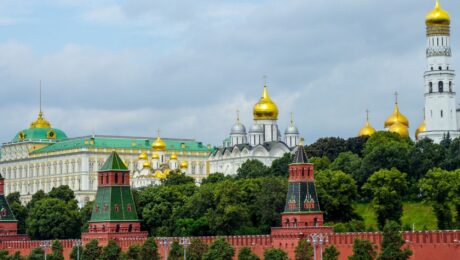
The Russian Federation has declared ten representatives of the Romanian Embassy in Moscow as personae non-gratae, according to the Ministry of Foreign Affairs, in response to Romania’s declaration of personae non-gratae on April 5 of 10 people working in the Russian Federation’s Embassy in Bucharest.
The Ministry of Foreign Affairs informs that the Russian Federation declared as persona non-gratae 10 persons working within the Romanian Embassy in Moscow, this being a reaction to the declaration personae non-gratae by Romania, on April 5, 2022, of 10 persons working within the Embassy Of the Russian Federation in Bucharest
MFA
The Ministry of Foreign Affairs recalls that the Romanian authorities’ decision was based on the activities and actions of the ten individuals who violated the provisions of the 1961 Vienna Convention on Diplomatic Relations. The MFA reiterates its strong condemnation of Russia’s illegal, unjustified, and unprovoked aggression against Ukraine, as well as war crimes and other international crimes committed by Russian forces in that country.
According to a local news source, Cristian Istrate, Romania’s ambassador to the Russian Federation, was summoned to the Russian Foreign Ministry and stayed for only 15 minutes. He emerged with an envelope containing the names of the ten Romanian embassy employees who will be expelled. In such cases, the names of those expelled are not made public.
It is unknown what he will do after leaving the post.
- Published in News