
Romanian oncology introduces AI: Docviser oncology platform
The fight against cancer is challenging for doctors, oncology researchers and patients. Romania is currently one of the countries offering state-of-the-art solutions based on Artificial Intelligence to make the entire process of treatment and healing of patients more efficient.
AI is replacing humans at a rapid pace, but we still wonder. We don’t know; we only know the era of AI is here, and from doctors to marketers and decision-makers, no job is safe for the artificial intelligence revolution.
MCRO, one of the most reputable software development companies in Cluj Napoca, launched Docviser, the first oncology healthcare application in Romania, dedicated to improving the collaboration between doctors and the care of cancer patients.
Docviser is a product that incorporates Artificial Intelligence to extract relevant data and provide the best results to improve medical decisions for those who use it. And the numbers so far are highly encouraging.
Since the launch of this application, it has been used by 99 doctors, nurses and pharmacists from 29 clinics registered in the application.
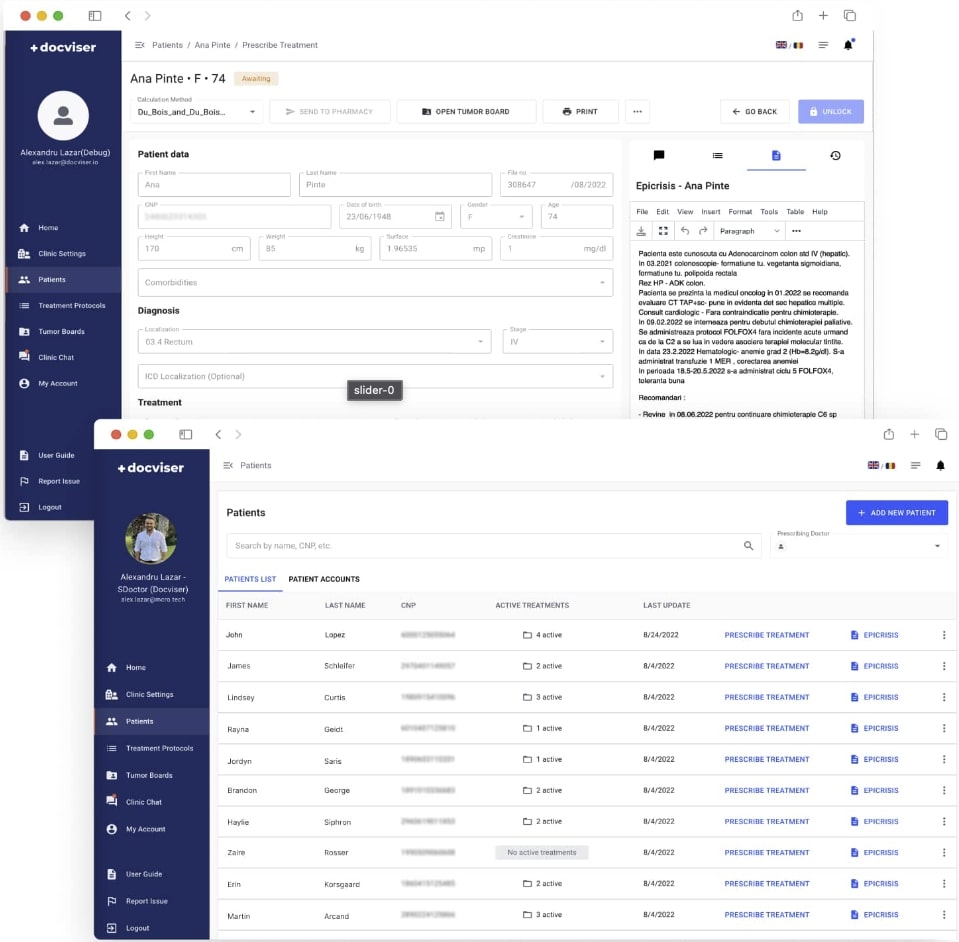
Artificial Intelligence helped all these specialists to prescribe 5106 drugs and treatment schemes and monitor treatment progress for the benefit of 1876 patients. During all this time, the platform supported establishing remote medical commissions to analyze 67 complex cases requiring multidisciplinary decision-making, with specialists located in different locations.
Docviser involves intelligently prescribing treatment through the continuous development of an artificial intelligence model. It recommends the optimal treatment in each case, taking into account both the active substance through the treatment protocol and the dose prescribed based on the one calculated and adjusted according to comorbidities, creatinine level and other relevant indicators that will appear in the future.
The product was developed with the direct involvement of oncologists, adapted to their needs and streamlines the flow of information from the patient to doctors, medical staff and pharmacists, offering real-time progress on the status of the treatment protocol.
The process of using Docviser involves oncologists but also assistants and pharmacists:
- Clinic doctors upload all patient data and initial diagnosis.
- For each case, a treatment protocol is assigned with the drug and dose recommended by the platform, or the doctor can decide to prescribe a new treatment.
- Once the treatment protocol is validated, it is sent to the pharmacy for preparation.
- As soon as the treatment is prepared, it is sent to the nurse to be administered to the patient.
Throughout the process, all the medical personnel involved in the patient’s treatment receive, depending on the level of access, live notifications about the status of the treatment protocol. Doctors can communicate through the web application through messages, comments or video calls, which made it possible to streamline the meetings of tumor boards.

„Docviser helps me make better treatment decisions by leveraging the power of state-of-the-art technology and Artificial Intelligence. But even if we think about the current activities, such as meeting multidisciplinary committees – the application allows the oncologist to talk in real-time with other doctors from other specialties (pathological anatomy, radiotherapy, cardiology and others) or simply to ask for a second opinion, and this makes these decisions much easier to make in a very organized environment. Before Docviser, it was much more difficult to set up these commissions, and doctors had to send the documents from one to another to be analyzed and signed. It was harder to meet, we communicated in writing, and working remotely was impossible. Docviser offers us all the support we need to make decisions much easier and securely. Now I can focus on what matters most – taking care of my patients”.
Alexandru Iliescu, Medical Director and head of the Oncology Department of Zalău County Hospital.
Docviser unifies technology with the oncology patient care process. Within this application, medical records and health history exist securely in one place for physicians and licensed medical personnel to gain a fast, in-depth, data-driven understanding of each patient’s needs.
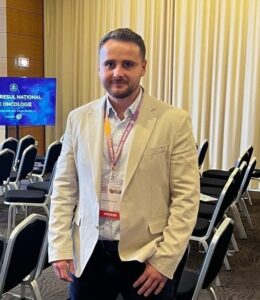
„Working with professionals in the field and having on our side medical expertise provided by oncology experts, we have created an intuitive and easy-to-use platform so that doctors and the entire medical staff can collaborate much more effectively within the clinics. Docviser perfectly combines scientific research and experience accumulated over the years with artificial intelligence and the latest generation of technological advances. I believe these fields are closely related, and there is an extraordinary potential in validating scientific research with real-life data; therefore, the application contributes to saving patients’ lives by making medical decisions easier”.
Alexandru Lazăr, Docviser CEO.
Docviser is an intelligent application for rapid care management of cancer patients and offers:
- Improving the collection of health data and the evolution of prescribed treatments;
- More accurate diagnosis, based on the medical experience of oncology professionals, transposed into the modules used by Artificial Intelligence;
- Personalized treatment protocols for each patient;
- The ability to communicate more quickly and efficiently between oncologists and the medical staff who help in oncological treatment;
- Cost and time management;
- Traceability of the medical document
Docviser is designed to become the online hub for cancer treatment services in the healthcare industry. This platform will become an indispensable tool for medical centers and open new cancer treatment and research horizons. The platform has the potential to revolutionize healthcare systems as we know them, using machine learning, artificial intelligence, big data and other intelligent technologies.
About MCRO
MCRO is a software development company focused on building innovative digital products. With over ten years of application development experience, MCRO’s software developers maximize the use of Artificial Intelligence from product creativity and design to development and scaling to provide companies with a maximized return on investment.
- Published in News
Schengen Vote Causes Diplomatic Tension Between Romania and Austria
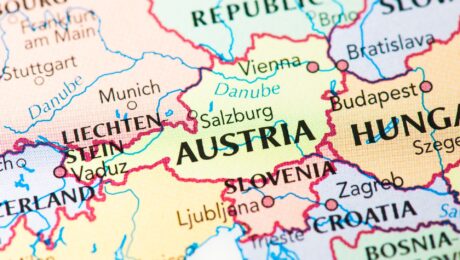
As mentioned by Valahia News, Romania started boycotting Austria following the December 8th vote on Schengen’s admission. As anticipated, Austria was the only country which opposed Romania, and the Eastern country was left outside the free economic area once again.
Romanian politicians, entrepreneurs, football club owners and large agricultural associations call for boycotting Austria and their brands. For a starter, Romania withdraws its ambassador to Vienna, but the political battle has just started. Some politicians publicly warned Austria to expect Romania to oppose its interest in Europe. Also, the Universitatea Craiova football club announced they won’t fuel in Austrian gas stations, and one museum cancelled the exhibition of an Austrian artist.
Also, politicians and influencers ask Romanians not to spend their vacations in Austria, as there are many other ski destinations for these winter holidays. Protests were summoned in front of the Austrian Embassy in Bucharest, and there is a certain turmoil in the country that show similar actions are to come.
Romanians have massively started boycotting Austrian companies. These days hundreds of social media posts ask or show fellow citizens boycotting Austrian brands. The easiest way to protest against the arbitrary decision to oppose Romania’s presence in Schengen was to stop buying fuel from OMV, the Austrian oil giant, and Romanians understood that quickly. Instead of driving to OMV petrol stations, Romanians are now heading for local brands like Rompetrol.
Another target is the banking and financial sector. Raiffeisen Bank and BCR – Erste Bank is on the list, and Romanians are asked to withdraw all their money from these banks or close their accounts here and head for the Romanian CEC Bank. Both Austrian banks issued rather boring than convincing press releases and posted them on their social media accounts, but this didn’t seem to help.
Also, the insurance sector is another battlefield for the ones upset with Austria’s decision: UNIQA or Vienna Insurance Group are also targeted by the boycott calls, and people are asked to head for other insurance companies.
An infamous company is on the list as well: Holzindustrie Schweighofer, now rebranded as HS Timber Productions, is the one seen as the usual suspect for exploiting the woods from the Romanian forests. More than that, the Austrian company was under investigation for using timber from illegal logging, but, as it always happens in Romania when it comes to Western companies, this investigation has never been concluded.
On top of that, products like coffee and natural juice are now pointed out: Julius Meinl, Red Bull and even Pfanner are only some of the Austrian brands for which they ask for a boycott.
Romania is one country whose citizens are not famous for this sort of boycott action or protesting against Western companies or decisions. Western companies thrive in Romania, especially the Austrian ones, which make billions in profit each year. Yet, this could be the beginning of an uprising that could wake the Romanian people and make them understand how to stand up for their rights.
- Published in News
Women Empowerment in Romania

While the European Union promotes women empowerment through gender equality, as it believes that diversity should be encouraged and men and women should have equal opportunities, Romania is a state that makes no exception to the rule. Inspired by the European way of thinking, this country strongly believes that women are brave, beautiful and powerful and that they should have the same opportunities to grow as men.
Women Empowerment in Romania – Challenges
That is not to say that Romania didn’t face its fair share of challenges regarding this issue. After the collapse of communism in Romania, new issues that had never been addressed emerged, one of them being the issue of gender equality. After it adhered to the European Union, a set of measures meant to promote women’s rights was passed, but it was never easy. One of them was the dissolution in 2010 of the National Agency for Equal Opportunities between Women and Men following the financial crisis that hit the country. During this time, an increase was noticed in the rate of unemployment for women of about 1.8 percent, while the rate of unemployment for men was only 1.2 percent.
It hasn’t been the only difficulty women empowerment in Romania has faced. However, in the present, thanks to the efforts made by the European Union, women benefit from way more opportunities to grow than they did before communism fell.
Women Empowerment in Romania – Claret Credit Romania case study
Women empowerment in Romania is encouraged by way of thinking that strongly believes that creativity and homogeneity are the most important ingredients in a team. Homogeneity and creativity are key ingredients in a team’s success. This is because all members work together in the same direction. The same goes for creativity. It will make it easier to complete tasks and solve problems faster.
It is common to hear about the gender gap in the workplace. Many women don’t hold high-ranking leadership positions within companies in some countries. This is not uncommon, but Romanian companies have many women who have built successful businesses and helped many people who were looking for quick financing solutions. These companies consider women to be a fundamental pillar of their businesses. One of the examples of this fact is the way Claret functions as an institution.
The women of Claret have brought a positive change to the company through their professional way of dealing with any problem, showing patience, calmness and professionalism. They handle all situations encountered calmly, creating a relationship based on trust with any client. They are the ones who interact with customers, trying to understand the reasons why they turn to an IFN and give them the best advice for choosing a loan. The women of Claret empathize with those who come to ask for financial help from the company’s IFN and put themselves in their situation to be able to offer them the ideal solution to overcome the obstacles caused by the lack of money.
At Claret, the position of CEO also brings with it many responsibilities. As a woman, it is sometimes difficult to make your presence felt in a male-dominated world of business, but the determination I have shown has helped me advance and occupy this important position within this IFN. The team is made up of many strong and courageous women who show professionalism every day. The ability to work under pressure is vital for this leadership position, but I am a confident woman who can handle any difficult situation.
Laura Leanca, CLARET general director (CEO)
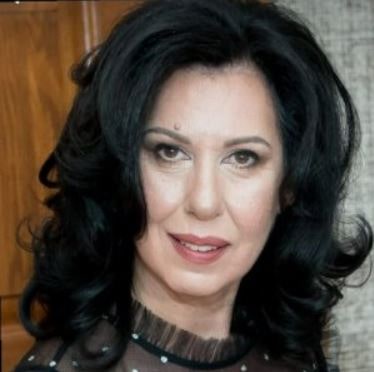
With their well-defined vision, spirit, creativity and ease with which they carry out their tasks, the women of Claret manage to create a work environment conducive to performance. In addition, the presence of strong and determined women in the company’s collective will always be an asset that Claret will have in front of competitors.
- Published in News
Romanian MP Pledges to Obstruct Austrian and Dutch Interests if Romania is Not Admitted to Schengen

Pavel Popescu, a member of the Romanian parliament, made a strong remark on Facebook over the weekend addressing the opposition Romania faces while trying to join the Schengen region from Holland and Austria.
Romania made enough compromises to be admitted to the much-desired Schengen region, but when foreign interests are at risk, hurdles and opposition are constantly there, making the compromises insufficient. When it came to debating the Schengen entrance issue, the Romanian MP had had enough and said he had no intention of adhering to instructions for the proper use of diplomatic language.
“I refuse to consider a failure of Romania’s accession to the Schengen area by the end of the year. Or the scenario of postponement until another suitable moment. Two countries are currently opposed: the Netherlands and Austria, with the mention that the Prime Minister of the Netherlands is very agitated these days with phones to widen further the club of the two countries full of issues, who would go into instant withdrawal without the daily overdoses of Russian gas and Colombian cocaine.”
Pavel Popescu, MP of PNL party and head of the Defense Committee
Popescu promised to follow through as he did with China in 2019 if the disagreement resulted in Romania still being denied entry to the Schengen region by the end of the year. Popescu indicated that he would not comment on what Romania did in the past to get into this position but that the final two years of his term would be devoted to passing laws and taking political action that would specifically target Austrian and Dutch businesses and interests (which are essentially Russian) present in Romania.
The sole distinction is that Popescu is not acting alone in this situation. Many of his generation’s legislative colleagues are willing to join him, hence his confidence in this position.
”I know the two countries’ ambassadors will send this post home to headquarters, and they do well. Because it’s not a political threat, but just a firm promise that some of us, who didn’t put our hands in the “honey jar” with these companies because we love our country, are a bit fed up. P.S: I’m not accepting diplomacy tips until December 8th. I am voted politically, I am not a diplomat”.
Pavel Popescu
- Published in News
EIT Innoenergy Becomes Minor Shareholder at Prime Batteries Technology after EUR 1 Billion Investment
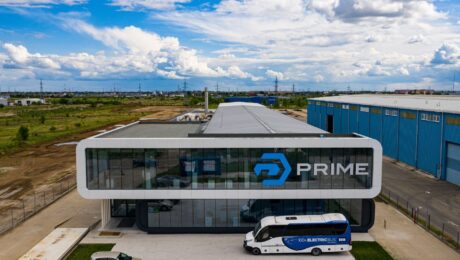
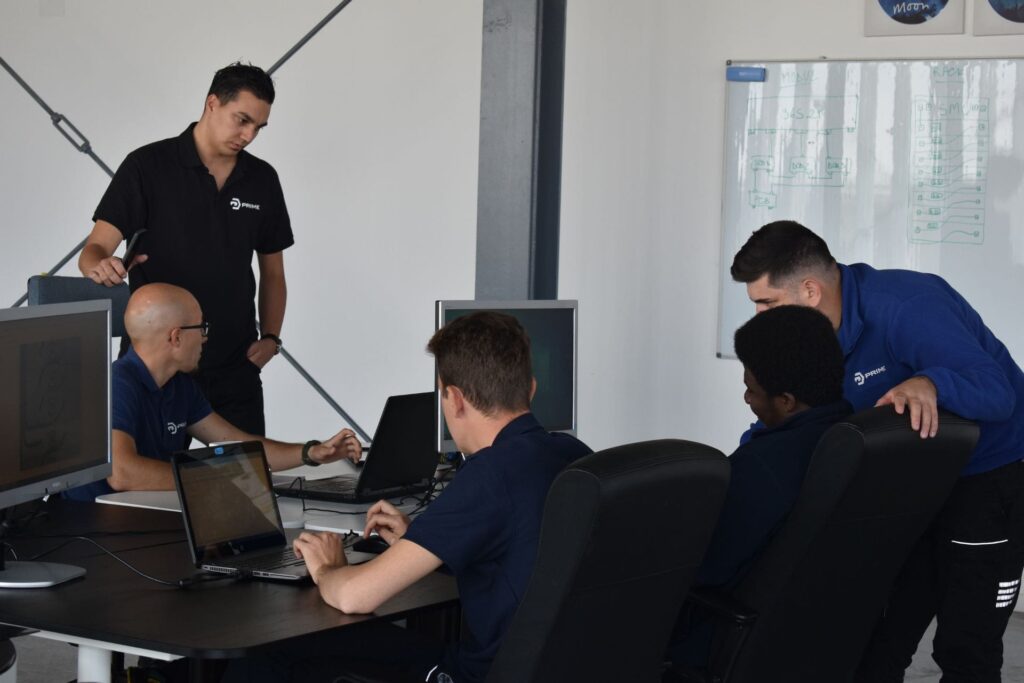
The European conglomerate EIT InnoEnergy, which includes banks and corporations from all across Europe, including ING, Volkswagen, and Siemens, co-founded in 2008 with the European Union, makes a sizeable investment in the Romanian energy storage solution supplier Prime Batteries Technology. The company has declared an investment of more than one billion euros to enhance the manufacture of batteries and storage systems.
As ValahiaNews reports, EIT InnoEnergy formally announced its purchase of shares from Prime Batteries Technology in Ilfov on Thursday in Brussels. Florin Spataru, the Economy Minister, Adina Vâlean, the European Commissioner for Transport, and several MEPs from Romania attended the event.
„Central and Eastern Europe is becoming an important player in the energy transition and battery production and we are glad to see a Romanian company developing”
Adina Vâlean, European Commissioner for Transport
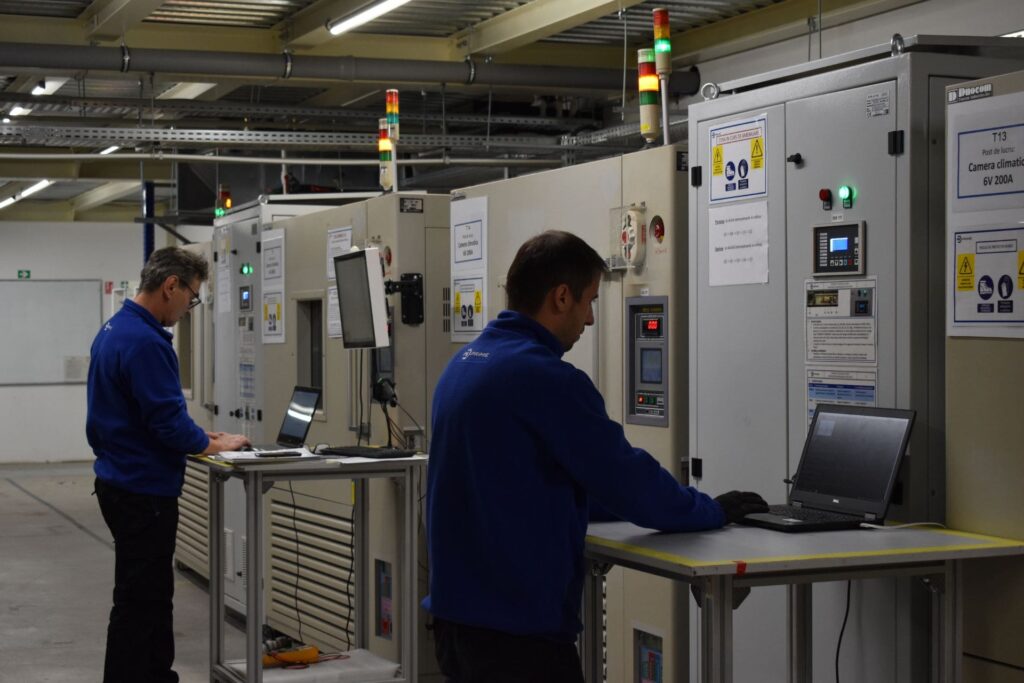
The existing Prime Batteries Technology factory in Cernica will receive an investment of about 200 million euros to increase the yearly output of the present level of 2GWh. According to business leaders’ predictions, the group wants to grow this capacity to 8 GWh, boosting the investment to more than 1 billion euros by 2026.
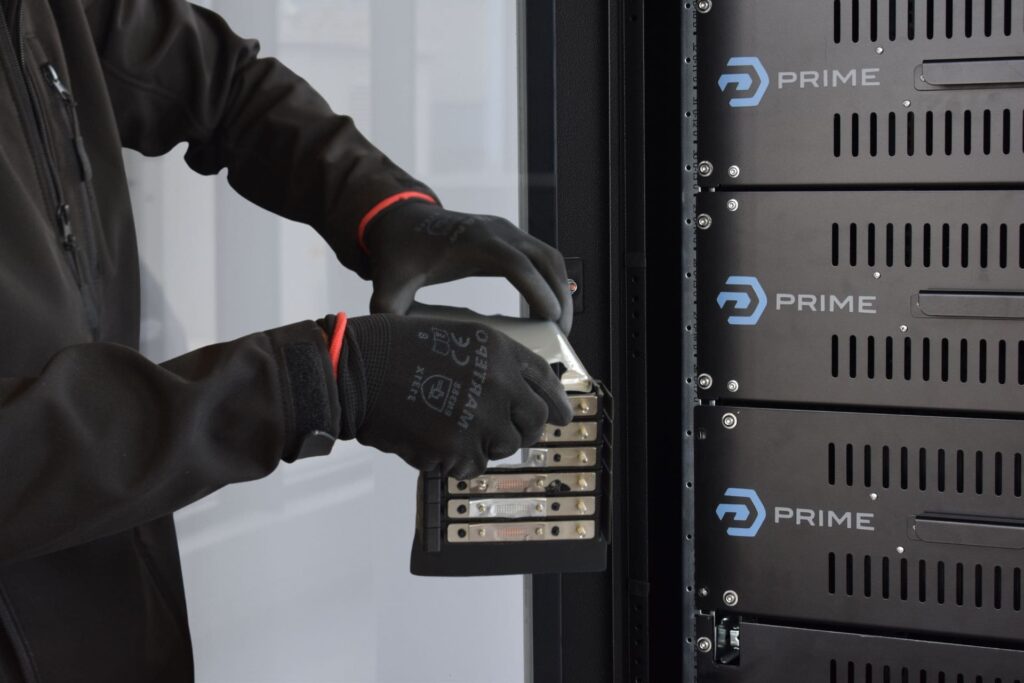
„A 30–35% component of the funding will come from investment funds focused only on renewable energy causes, with the remaining amount funded by loans. Additionally, we sent a memo to the Ministry of Energy, and we are eagerly awaiting a response […..]”.
Adrian Polec, Stakeholder at Prime Batteries Technology
EIT InnoEnergy encourages innovation in several different areas. These fields include energy storage, transportation and mobility, renewable sources, and sustainable buildings and communities, all of which are supported by the company’s trustworthy network of more than 1200 partners and 29 shareholders. The portfolio, which has over 180 businesses, will have made 72.8 billion euros in revenue and avoided 1.1 gigatons of carbon dioxide from entering the environment by 2030.
- Published in News
YAROOMS, Romanian Provider of Workplace Management Software, Raises €2 Million in Funding.
A second promising Romanian business joins its initial funding round and raises EUR 2 million for future growth.
In order to pursue a new market opportunity and spur expansion, Yarooms, a SaaS provider of industry-leading workplace experience solutions, has raised 2 million EUR in funding. With 1.6 million EUR, GapMinder is the principal investor. SeedBlink is another investment.
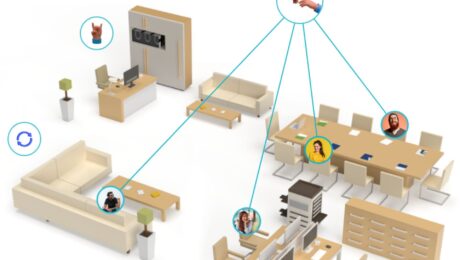
Dragos Badea, Emil Muhtu, and Marcel Preda collaborated to start Yarooms, a technology business in Romania, in 2010. The business develops robust yet user-friendly office management software, including options for desk reservations, meeting room reservations, hybrid work planning, digital signage, and visitor management.
To thrive in the modern world, workplaces must become more human-centric than ever. Strong collaboration culture, flexibility, and employee autonomy – Yarooms’ mission is to help companies foster these values and bring freedom to their employees. We are agile and understand our industry very well, allowing us to innovate and create solutions that help our clients create cutting-edge employee experiences even in the hardest times, such as the Covid pandemic. As we pursue newly identified market opportunities, we are looking to accelerate growth by expanding the team and its know-how.
Dragoș Badea, CEO and Co-founder of Yarooms
Their leading investor, together with the representative of SeedBlink, Andrei Dudoiu, praise the team at Yarooms behind the product and the product’s potential itself.
Over 50 nations are served by Yarooms, with the USA, Canada, Italy, and the UK being among the most significant markets. Business clients come from various sectors, including financial companies, governmental agencies, and educational institutions. Columbia University, Dedalus, the National Health Service, AAA, Dr. Martens, Cerved, and Robalino are a few examples of clientele.
- Published in News
Nokian Tyres to Build Million Euro Plant in Romania

In addition to its current operating facilities in Finland and the US, Nokian Tyres, a Finnish firm, has announced plans to develop a tire factory in Romania. The business was founded in Nokia, Finland, in 1988 and produces tires for cars, trucks, buses, and heavy equipment.
The new factory will be located in North-West Oradea, not far from the Hungarian border, and it will have a 6 million tire yearly manufacturing capacity. This project, which will include 650 million euros in investment, is regarded as a greenfield project.
The board of directors of Nokian Tyres decided last month to begin a controlled withdrawal from the area and signed a deal to sell its Russian subsidiary as a result of the conflict between Russia and Ukraine and the subsequent tightening of sanctions. This led the manufacturer to decide to broaden its operational strategies and invest in a new manufacturing facility in Europe to ensure the supply of its goods. To accomplish its objectives, the upcoming Romanian plant is essential.
”A world-class manufacturing facility in Europe is a key step in getting additional capacity and creating a balanced manufacturing platform as we start building the new Nokian Tyres without Russia”.
Jukka Moisio, Nokian Tyres Presdinet and CEO
Because of the nearby production of green energy, the logistical and administrative advantages, and the readily accessible skilled labour force, Oradea is the ideal location for the construction and growth of the facility.
The plant’s construction is scheduled to begin in early 2023, and it is projected that the first tires will be produced in the second half of 2024 with a staff of 500 people. Early 2025 is the expected start date for commercial production, along with the addition of a house distribution facility for the transportation and storage of tires to the industrial site.
- Published in News
Buying Accession to Schengen: Romania makes concessions again
Many questions remain after the contentious negotiations about Romania’s Schengen admission at the most recent European Commission meeting. Does Romania merit admission to the Schengen region or not? The majority of respondents said yes, while Holland said no.
Netherlands’ stance toward Romania leaves no room for confusion. The Netherlands maintained the same antagonistic stance regarding Romania’s Schengen membership for 11 years. They remained unconcerned with any improvement in Romania and openly opposed its accession.
Of course, problems don’t end there, as the Romanian MEPs have often noted, the Netherlands opposes Romania on every issue before the European Commission. But why?
The Romanian Fleet purchases two Dutch „Damen” ships for search, rescue, and firefighting operations in an effort to mend fences with Holland. The Dutch company Damen is going to design and build these cutting-edge warships in Galati and Braila, in Romania. The more peculiar aspect of the agreement was its completion precisely one day before the Dutch prime minister visited Romania and two months before Romania’s key referendum to join the Schengen region.
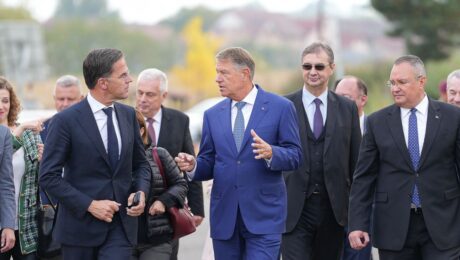
Romania still needed to meet several conditions before joining Schengen, according to Prime Minister Mark Rutte during his visit. Yet, he and the Netherlands are collaborating with the Ukrainian compatriots to join the EU and NATO, a public involvement that shows that the Dutch impudence knows no bounds.
The Dutch position on the Schengen extension is simple: when the requirements are met, accession is possible. To be able to assess this, we need up-to-date information from the European Commission on all relevant areas for political decisions on Schengen accession.
Mark Rutte, Dutch prime minister
In actuality, Dutch greed knows has no limits. Due to Romania’s refusal to grant them access to the Constanta port, a trade route that enables the transport of products between Asia and Europe, Holland rejected Romania’s bid to join Schengen. The Netherlands will oppose Romania’s entry into Schengen unless the country pays a bribe at the port of Constanta, similar to what the Austrians did in 2004 with Petrom, a significant organization that regulates Romania’s oil production.
Media reports claim that the Netherlands wants to take control of the Constanta port because it is strategically located at the crossroads of trade routes that link the markets of the landlocked nations of Central and Eastern Europe with Central Asia and the Far East and plays a significant role in the European intermodal transport network.
If this scenario is accurate, it’s entertaining to see how Western countries practice greedy economic and cultural imperialism while masking their behaviour as political correctness. Politically correct, anti-corruption and anti-discrimination rhetoric is a facade in Western countries when it comes to individual scopes and interests. Despite all of Romania’s efforts and accomplishments, the Netherlands vehemently opposes Romania’s entry into the Schengen region and will continue to do so until Romania once more bows its head to the West.
- Published in News
Diplomatic Controversy: Romanian Investors Association Not Invited to Moldova Business Week 2022
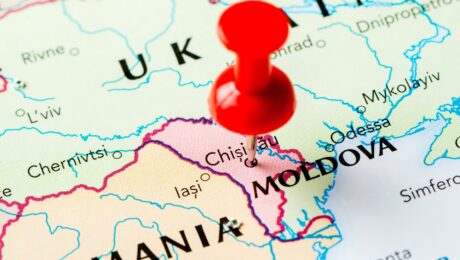
The relationship between Romania and the Republic of Moldova extends beyond the fact that they both have a similar historical and linguistic heritage. According to some, Romania is Moldova’s closest ally in the neighbourhood and the largest foreign investor in the sister state. Additionally, Romania is a very active member of the EU in helping Moldova become a part of the European economic community.
According to Valahia News, Moldova Business Week 2022, the most important economic event devoted to investors in the Republic of Moldova, would have been a fantastic opportunity for the Romanian Investors Association in Moldova (AIR) to fortify their relationships in the nation. Additionally, AIR would have had the chance to entice other Romanian businesses to invest in the sister nation. However, Moldovan officials didn’t consider it a priority to invite AIR to the event, a gesture that puzzled the Romanian Ambassador to Chisinau, HE Cristian-Leon Turcanu.
I noticed with surprise that AIR – Romainan Association of the Investors in Moldova is not part of Moldova Business Week 2022, a large-scale event dedicated to business, given that the direct investments of the 30 AIR members represent over 54% of foreign direct investments in the Republic of Moldova in the last 10 years.
HE Cristian-Leon Turcanu on the diplomatic blunder of the Moldovan officials
Companies from #Romania present in the Republic of Moldova have created over 10,000 jobs and have a total turnover of almost 1 billion euros.
Romania remains the main commercial partner of the Republic of Moldova, and the prospects for development are particularly good.
Dan Nutiu, the president of AIR, said that he was surprised by this diplomatic gaffe but added that the Republic of Moldova had also declined to invite the Association in 2021.
We cannot explain the reason for our absence from the event. Probably, the current format was established before the change of the management of the Investment Agency. We were not invited to last year’s edition either, and probably the same format was kept. It was probably a minor mistake on their part this year and I can’t explain the reason for the absence. It is a message that gives us reasons for concern, in the context in which Romania is the main economic partner of the Republic of Moldova
Dan Nutiu, the executive president of AIR, cited by Deschide.md
It appears highly likely that Moldovans are reluctant to praise Romanian investments in their nation because of the close vicinity of the situation in Ukraine. Hence the alleged diplomatic error and „lack of communication.” The Romanian ambassadors in Chisinau and the Romanian investors in the Republic of Moldova could start learning Russian immediately if they could not communicate in Romanian.
- Published in News
Russia Expels Another Romanian Diplomat
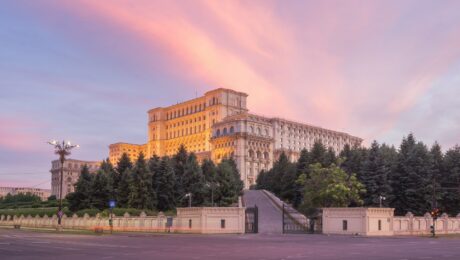
Russia expels another Romanian diplomat in response to a similar decision taken by the authorities in Bucharest.
According to Serghei Lavrov, the Russian Foreign Affairs minister, the decision was made in response to Romania’s action to expel a Russian diplomat. In return, Cosmin Constantin Ionita, Romania’s charge d’affaires in Russia was declared a non grata person.
On September 8, Romania’s chargé d’affaires in the Russian Federation (prime collaborator, according to the Bucharest MAE website), Cosmin Constantin Ioniţă, was invited to the Russian Ministry of Foreign Affairs, where he was handed a note from the ministry regarding declaring an employee of the Romanian Embassy in Russia as „persona non grata”.
Serghei Lavrov, the Russian Foreign Affairs minister.
For its part, the Romanian Ministry of Foreign Affairs says that the declaration by the Russian Federation as persona non grata of a representative of the Romanian Embassy in Moscow is a reciprocity measure compared to the declaration as persona non grata on the territory of Romania, announced by the Romanian MFA in August, of a representative of the Embassy of the Russian Federation in Bucharest.
As early as March, Romania, along with all the EU states, the USA and Great Britain, was put by Russia on the list of „countries unfriendly to Russia.”
In April 2022, Romania announced that it had expelled ten Russian diplomats following the Bucha genocide. In August, the Romanian MFA expelled another diplomat from the Russian Embassy in Bucharest.
Moscow then said it would respond „adequately” to Bucharest’s decision.
- Published in News