
Romania’s Political Deadlock Enters New Phase as Adrian Veștea Is Nominated to Form Government
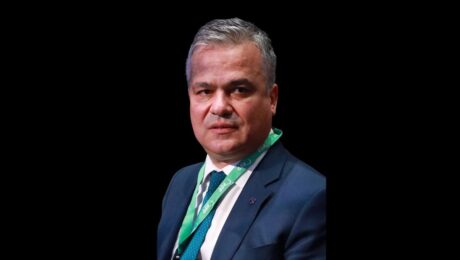
Romania’s prolonged political deadlock entered a new phase on Sunday morning, after Adrian Veștea was nominated to form a new government, following Eugen Tomac’s resignation from the mandate of prime minister-designate.
The development comes after days of tense negotiations in Bucharest, where Tomac failed to secure a clear parliamentary majority for his proposed executive. His nomination had been presented as a possible technocratic solution to the crisis, but the lack of support from key parliamentary parties quickly turned the formula into another fragile experiment.
Veștea’s nomination marks a shift back toward a more politically anchored attempt at governing. Unlike Tomac, whose proposed cabinet was framed around specialists and a certain distance from the main parliamentary parties, Veștea comes from within the National Liberal Party’s administrative structure and has a political career closely tied to local government, party organisation and county-level negotiations.
A former mayor of Râșnov, former president of the Brașov County Council, and former Minister of Development, Public Works and Administration, Adrian Veștea is no stranger to government. His political profile is built around administration, infrastructure, local networks and institutional management rather than ideological confrontation or public spectacle.
This is precisely why his nomination may be read as a return to political realism after the failed Tomac formula. Romania’s Parliament remains fragmented, and any new cabinet needs not only a programme but also a functioning majority. A technocratic list without party commitment proved insufficient. Veștea now has to test whether the parties are willing to accept a more conventional compromise.
For Romania’s business environment and institutional stakeholders, the key issue is no longer only who leads the government, but whether the next executive can secure enough support to act. The country faces pressure on public finances, European funding, administrative reforms and investor confidence. A government unable to pass legislation or defend its measures in Parliament would only extend the uncertainty.
Tomac’s resignation closed a short-lived attempt to form a cabinet outside the direct influence of the main parliamentary parties. Veștea’s nomination brings the crisis back into the hands of political negotiators. That may not be the most elegant solution, but it could prove more functional if the main parties decide that continued instability is more costly than compromise.
The next days will show whether Adrian Veștea can build the parliamentary support that Eugen Tomac could not. If he succeeds, Romania could move toward a new government after weeks of uncertainty. If he fails, the crisis will deepen further, increasing pressure on the president and parliamentary parties to identify yet another formula.
- Published in News
FBE Bucharest 2026: A Strategic Legal Forum for Romania’s Institutional Visibility in Europe
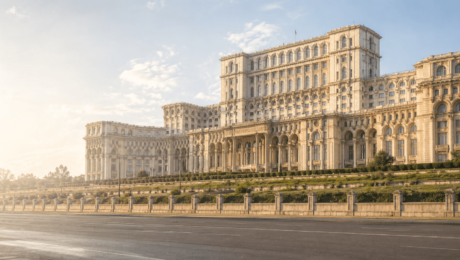
Bucharest hosts one of the most relevant European legal gatherings this week, as the European Bars Federation General Congress 2026 takes place in the Romanian capital between June 11 and 13.
The event brings together bar leaders, lawyers, legal professionals and representatives of European legal institutions for three days of professional debate, institutional dialogue and international networking. For Romania, the congress represents more than a legal event. It is a strategic moment of visibility for Bucharest and the Romanian legal profession within the European institutional landscape.
The central theme of this year’s congress addresses one of the most sensitive issues facing the legal profession today: professional secrecy, the lawyer’s duty of confidentiality and client trust under the increasing pressure of KYC and AML regulations.
Bucharest as a European Legal Meeting Point
The Fédération des Barreaux d’Europe, also known as the European Bars Federation, brings together bar associations and lawyers from across Europe. The 2026 General Congress places Bucharest at the centre of a debate that is becoming increasingly relevant for legal systems, regulators, financial institutions and professional bodies across the continent.
The choice of Bucharest as host city strengthens Romania’s position as a credible venue for European professional and institutional dialogue. It also confirms the role of the Romanian capital as a regional hub where legal, business, and regulatory communities can meet on topics of direct European relevance.

As Aurel Ciobanu, Dean of the Bucharest Bar, has stated, “Bucharest advocacy has always been one of the strongest voices of the legal profession in Romania,” adding that he believes in a Bucharest Bar that is “united, respected and involved,” where every lawyer finds the support, dignity and strength to practise independently.
Professional Secrecy, Compliance and Institutional Trust
The topic of FBE Bucharest 2026 is not merely technical. It touches on the foundation of the lawyer-client relationship and the institutional balance among public interest, regulatory compliance, and the independence of the legal profession.
Across Europe, lawyers are increasingly required to operate within a complex framework of anti-money laundering rules, know-your-customer procedures and transparency obligations. At the same time, professional secrecy remains a core guarantee of justice, legal defence and trust between clients and their lawyers.
The question raised by the congress is therefore essential: how can legal professionals comply with legitimate regulatory requirements without weakening the confidentiality that defines their role in a democratic legal system?
This debate is relevant not only to lawyers but also to policymakers, regulators, business leaders, and institutions that depend on legal certainty, trust, and predictable professional standards.
European Legal Leaders in Bucharest

The congress brings to Bucharest senior representatives of the European legal profession, including bar leaders and lawyers involved in debates on institutional, regulatory, and professional ethics.
Among the names associated with the event are Michael Griem, President of the Fédération des Barreaux d’Europe, Alex Tallon, Vice President of the Council of Bars and Law Societies of Europe, and Eric Heinke, Vice President of the Vienna Bar Association.
Romanian legal professionals are also part of the programme, including specialists with experience in technology, compliance, AI, data privacy, regulatory matters, dispute resolution and public procurement.
Their presence reflects the increasingly interdisciplinary nature of the legal profession. Today’s lawyers are expected not only to interpret the law but also to understand regulatory systems, technological change, financial compliance and the institutional expectations that shape business and public life.
A Visibility Moment for Romania’s Legal and Business Environment
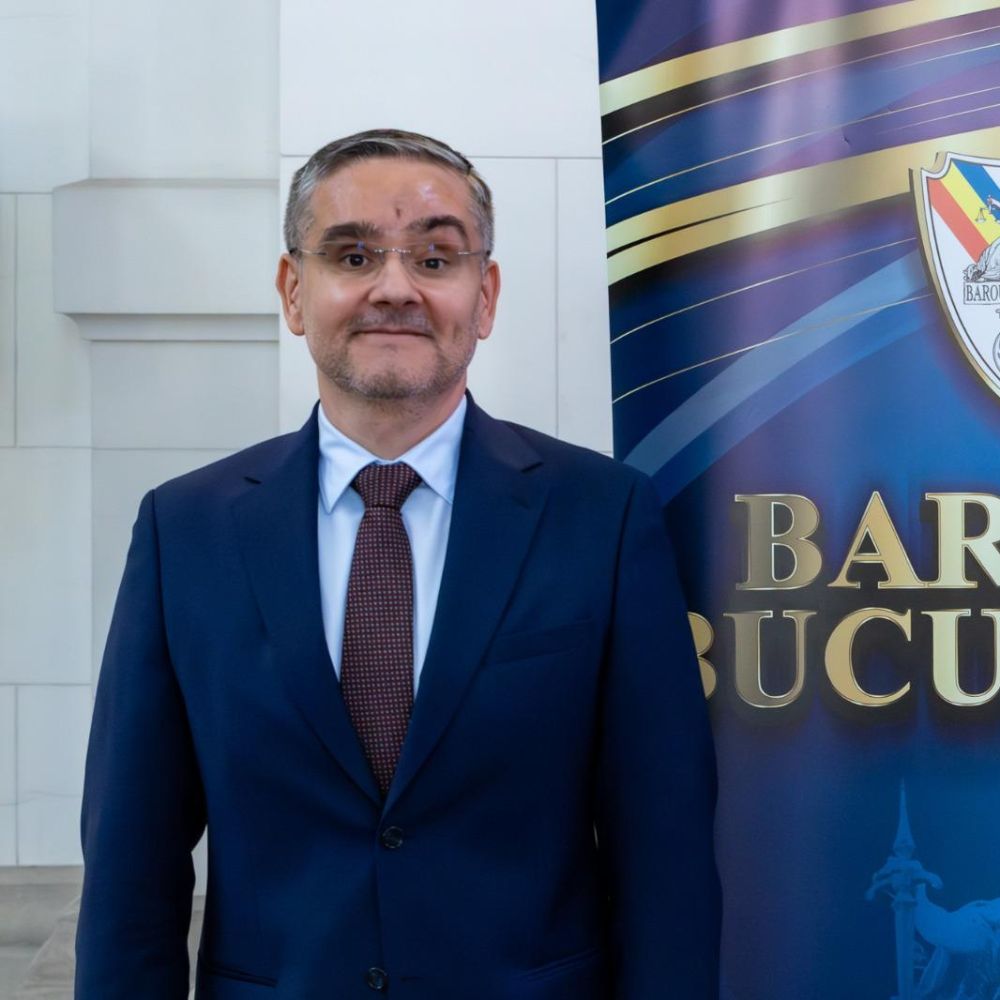
As Alexandru Păun, Bucharest Bar representative for FBE Bucharest 2026 and coordinator of the Bar’s international relations activity, stated, international cooperation between bar associations is essential in a period when the legal profession faces increasingly complex regulatory, technological and institutional challenges. In his view, conferences of this level offer bar leaders a valuable platform to exchange experience, share best practices and strengthen professional dialogue across borders.
For Romania, hosting FBE Bucharest 2026 contributes to the country’s broader institutional visibility in Europe. International professional congresses of this level help position Bucharest as a city capable of supporting serious European dialogue, not only in politics and business, but also in law, ethics and regulation.
The event also offers a valuable signal for the Romanian business environment. A strong, independent and internationally connected legal profession is part of the infrastructure that investors, companies and institutions consider when assessing a market.
Legal certainty, professional confidentiality, compliance expertise and institutional credibility are no longer separate issues. Together, they influence how a country is perceived by investors, regulators and European partners.
Romania’s Role in the Future of Legal Trust
FBE Bucharest 2026 takes place at a time when the legal profession is being reshaped by digital transformation, cross-border regulation, artificial intelligence, financial transparency rules and growing compliance obligations.
In this context, Romania’s role as host is significant. Bucharest is not simply providing the venue for a professional congress. It is participating in one of Europe’s central debates about the future of legal trust.
Between June 11 and 13, the Romanian capital becomes a platform for dialogue on how lawyers, bars and institutions can protect professional secrecy while responding to the legitimate demands of modern regulation.
For Romania, this is a strong institutional moment. For Europe’s legal profession, it is a necessary debate.
- Published in News
Poland’s Soft Power in Moldova Is No Longer a Detail Romania Can Afford to Ignore

Romania has spent years assuming that its cultural, linguistic and historical closeness to Moldova would naturally translate into influence. Eurovision offered a public, uncomfortable reminder that this assumption is no longer enough.
Moldova’s jury gave its 12 points to Poland, not to Romania. The gesture matters not because Eurovision should be treated as foreign policy, but because cultural voting often reveals emotional proximity, visibility and accumulated soft power. On that symbolic stage, Poland appeared closer, more present and more effective than Romania.
From an international lobby perspective, this should be read as a warning signal. Romania cannot continue to rely solely on shared language, shared history, and declarations of brotherhood while other countries consistently invest in cultural presence, media visibility, educational projects, entertainment formats, and public diplomacy.
Poland has understood something Romania often treats superficially: influence is not inherited. It is built, maintained and refreshed. It requires media projects, cultural exports, recognisable public figures, institutional continuity and a clear strategy for winning public sympathy over time.
In Moldova, Poland is increasingly present not only in politics and diplomacy but also in popular culture and media. That matters. Soft power is rarely won through official speeches. It is won through television, music, education, partnerships, cultural events, scholarships, entertainment formats and repeated positive exposure.
Romania, despite having the strongest natural connection to Moldova, often behaves as if that connection will work automatically. It will not. A shared language can open the door, but it does not guarantee influence. A common history can create emotional capital, but it does not replace contemporary relevance.
The Eurovision vote showed this clearly. Romania was not rejected because Moldova forgot its history. Romania was overlooked because others are more active, more visible and, in some cases, more strategically present in the Moldovan public space.
This is where the discussion becomes strategic. Moldovan audiences, especially younger ones, do not respond only to historical arguments. They respond to cultural quality, opportunity, visibility, entertainment, digital presence and modern relevance. If Romania wants to remain influential in Moldova, it must compete in the present, not only invoke the past.
For a platform such as Lobby Romania, the issue is not merely Eurovision. It is the larger question of how Romania understands influence in its immediate neighbourhood. Soft power is no longer an abstract diplomatic concept. It is visible in cultural consumption, in media preferences, in public sympathy and, occasionally, even in symbolic votes that expose deeper shifts.
Romania also needs to understand that influence in Moldova is now contested. Poland, the European Union, Turkey, Russia and other actors all compete for attention, trust and emotional relevance. Romania has advantages, but they can be wasted if not actively used.
The problem is not that Moldova gave 12 points to Poland. The problem is that Romania should ask why Poland was able to generate that level of public and jury affinity in a space where Romania should naturally be among the most visible cultural actors.
Soft power cannot be improvised only when a vote is lost, a crisis appears or an election approaches. It must be permanent. It must be funded. It must be professional. It must speak the language of the current generation, not only the language of historical memory.
Romania does not need to panic. But it does need to wake up.
Moldova remains close to Romania, but closeness is not the same as influence. If Poland can win attention, sympathy and symbolic victories through consistent cultural presence, Romania must stop treating Moldova as a guaranteed emotional territory.
The lesson is simple: Romania must behave less like a country waiting to be loved and more like one serious about earning, protecting, and expanding its influence.
- Published in News
Bucharest B9 Summit: Strong Words, Fuzzy Timetables
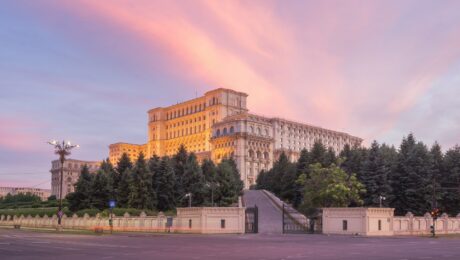
Bucharest hosted a high-stakes Bucharest Nine summit that placed NATO’s eastern flank back at the centre of Europe’s security debate. Leaders used the meeting to send firm political messages, call for increased defence spending, and reaffirm their strong support for Ukraine. Yet beyond the diplomatic language and strategic urgency, the summit left several practical questions unanswered.
The political signal was clear. The roadmap for turning pledges into actual military capability was less clear.
The meeting was framed around the need for a stronger Europe inside a stronger NATO, with the eastern flank presented as one of the Alliance’s most exposed and strategically important regions. Leaders endorsed a reinforced regional posture, faster work on NATO’s next-generation defence priorities and closer coordination between NATO and the European Union.
Defence spending was one of the most visible themes. The summit renewed pressure on allies to move beyond existing commitments and consider much higher levels of military expenditure, including an aspirational benchmark of 5% of GDP. The message was designed to show seriousness in the face of Russian aggression and long-term instability on Europe’s eastern border.
The summit also focused on military mobility, logistics and readiness across the region. Leaders discussed the need to move troops and equipment more quickly, strengthen air and missile defence, improve counter-drone capabilities, and secure supply chains for the regional defence industrial base. Support for Ukraine remained central, with renewed commitments to coordinate deliveries and respond to Kyiv’s military needs.
For Romania, hosting the summit was diplomatically significant. It strengthened Bucharest’s position as a key voice on Black Sea security and the eastern flank, while reinforcing Romania’s case for deeper allied investment in regional infrastructure, defence capabilities and long-term force posture.
But the practical test begins after the summit
The central weakness of the meeting was the lack of precise delivery timelines. Leaders are committed to capability goals, but the summit did not clearly define when those capabilities will be deployed, where they will be stationed or how quickly infrastructure gaps will be closed. Without binding timetables, political pledges risk becoming extended pressure campaigns rather than immediate deterrence measures.
The defence spending debate also remains difficult. A 5% of GDP target is politically powerful, but for many allies it would require major fiscal shifts. That creates a gap between what is strategically desirable and what can realistically be achieved in the current budget cycle.
Operational synchronisation is another unresolved issue. National procurement systems, different readiness standards, logistical bottlenecks and slow defence acquisition processes remain major obstacles. These are not problems that can be solved through summit declarations. They require detailed work by defence planners, finance ministries, procurement agencies and allied commands.
The Bucharest B9 summit succeeded in setting the political frame. It raised expectations, reinforced regional unity and placed Romania at the centre of a crucial security conversation. But it did not yet close the loop between ambition and delivery.
For Romania and the wider eastern flank, the next tests will not be speeches or declarations. They will be binding timelines, visible force posture changes, concrete budget decisions and actual hardware on the ground.
- Published in News
Black Sea AI Gigafactory Romania: A Strategic Bet on Compute, Energy and State Capacity

Romania has launched the formal selection procedure for the consortium leader to advance the Black Sea AI Gigafactory Romania project, one of the most ambitious artificial intelligence infrastructure plans announced by the state in recent years.
At first glance, the headline sounds like another attempt to attach Romania to the global AI wave. In reality, the stakes are far higher. The Black Sea AI Gigafactory Romania project is not about apps, digital slogans or another government promise dressed up as innovation. It is about compute capacity, energy access, strategic positioning and the much harder question of whether the Romanian state can execute a project that matters beyond the news cycle.
What the Black Sea AI Gigafactory Romania project actually means
The Black Sea AI Gigafactory Romania initiative is being framed as a strategic computing infrastructure project with national and regional relevance. Its first phase is expected to start with around 20,000 GPUs, with the possibility of scaling to more than 100,000, depending on demand, financing and implementation capacity.
That detail alone places the project in a different category from the usual public discussions about artificial intelligence.
Countries do not become relevant in AI by talking about digital transformation. They become relevant when they build the infrastructure required to train, run and scale advanced systems. That means processors, cooling, secure facilities, data infrastructure, reliable energy and the capital needed to support all of it over the long term.
The Black Sea AI Gigafactory Romania project is therefore not just a technology story. It is an industrial policy story.
Why Romania wants a Black Sea AI Gigafactory
The logic behind the Black Sea AI Gigafactory Romania plan is straightforward. The next phase of the AI economy will not be defined only by who builds attractive products. It will be defined by who controls access to compute.
This is where the conversation becomes strategic.
A country that can host serious AI infrastructure has a stronger hand in areas such as industrial automation, cybersecurity, defence-related modelling, logistics, advanced analytics, research and high-value digital services. A country that lacks such infrastructure risks remaining a client of foreign platforms, foreign cloud architecture and foreign strategic priorities.
Romania appears to have understood that dependence on AI will look very similar to dependence on energy or critical technology. It will limit economic options, weaken sovereignty and leave local institutions reacting to decisions made elsewhere.
That is what gives the Black Sea AI Gigafactory Romania project political weight.
Black Sea AI Gigafactory Romania is also an energy project
One of the most important aspects of the project is that it falls under the Ministry of Energy. That is not a bureaucratic detail. It is the core of the story.
Artificial intelligence at scale is inseparable from electricity. Large GPU clusters require a massive, stable power supply, substantial cooling capacity, and long-term operational resilience. Without energy, there is no serious AI infrastructure. Without energy planning, the Black Sea AI Gigafactory Romania project remains a concept rather than a strategic asset.
This is where the Romanian proposal becomes more credible than many of the superficial AI hub narratives now circulating across Europe. Romania is not only talking about start-ups or software ecosystems. It is trying to enter the harder terrain of infrastructure and power.
That is also why the project should be viewed through the lens of industrial competitiveness, not only through the lens of digital policy.
A regional ambition, not just a domestic announcement
Romania’s positioning around the Black Sea AI Gigafactory has consistently suggested that the project is intended to serve a broader regional role rather than merely the domestic market. The Black Sea framing is not accidental. It points to a geopolitical ambition to place Romania more clearly on the map of strategic infrastructure for Eastern Europe and the wider Black Sea area.
If implemented, such a project could strengthen Romania’s relevance in a region where technology, security, energy and connectivity are becoming increasingly interconnected. It could also support the country’s claim that it wants to move from being a peripheral tech consumer to becoming a more serious infrastructure player.
That is the positive case.
The harder question is whether Romania can deliver on it.
The real test is not vision, but execution
Romania has no shortage of grand announcements. Its chronic weakness lies elsewhere: execution.
The Black Sea AI Gigafactory Romania project now enters a phase where the state will have to prove it can do more than generate headlines. The government has launched an Expression of Interest process to identify and pre-select a consortium leader, with the submission deadline set for June 14, 2026. That gives the initiative more procedural substance than many previous announcements, but it does not solve the underlying problem.
A project of this scale requires administrative discipline, policy continuity, credible partners, clear financing, procurement integrity, and long-term coordination among ministries, regulators, and strategic investors. Romania has historically struggled with exactly these things.
This is why the central issue is no longer whether the Black Sea AI Gigafactory Romania project sounds impressive. It does. The real issue is whether the Romanian state can sustain the political and institutional coherence required to move from declaration to implementation.
Why the Black Sea AI Gigafactory matters beyond technology
The Black Sea AI Gigafactory Romania project matters because it sits at the intersection of three strategic domains that are increasingly difficult to separate: technology, energy and state capacity.
In the coming years, the countries that matter in artificial intelligence will not necessarily be those that produce the loudest political messaging. They will be the ones capable of aligning infrastructure, capital, governance and long-term strategic intent.
Romania now has an opportunity to attempt exactly that.
If the project advances, it could become one of the most important infrastructure bets the state has made in the digital era. If it stalls, it will join the long list of Romanian ambitions that recognised a real strategic shift but failed to build the institutions capable of responding to it.
Black Sea AI Gigafactory Romania could become a stress test for the Romanian state
There is a temptation to read every AI announcement as proof that a country is modernising. That would be a mistake here.
The Black Sea AI Gigafactory Romania project is not proof that Romania has entered the top tier of the European AI economy. It is proof that Romania wants to try. Whether that ambition becomes credible will depend on what happens next: partner selection, financing structure, implementation planning, energy alignment and the state’s ability to preserve seriousness once the political visibility fades.
That is why this is not just a story about artificial intelligence.
It is a story about whether Romania can still build something strategic, complex and relevant in a sector where timing, scale and credibility matter more than rhetoric.
- Published in News
Romania’s China Agriculture Deal Signals a Broader Trade and Industrial Policy Shift

Romania’s new agricultural agreement with China is more than a sectoral export story. It signals an attempt to reposition the country from a predominantly raw-commodity supplier to a more competitive exporter of processed, value-added agri-food products, while also testing Bucharest’s capacity to use trade openings as an instrument of industrial policy.
A bilateral agreement with strategic economic weight
Signed in Beijing, the new framework opens a formal path for Romanian agri-food exports to expand into the Chinese market, with dairy and poultry at the forefront of the first implementation wave, and pork and grains expected to follow in later stages. Romanian authorities have presented the move as a strategic breakthrough, not only because of market access itself, but because it creates a longer-term platform for export diversification beyond the European Union.
For Romania, the importance of such a deal lies in the structure of the domestic agricultural economy. The country has long had strong production capacity in several core segments, but has often captured too little value because much of its output left the country as bulk or minimally processed goods. The China opening creates a commercial argument for more domestic processing, stronger certification systems, tighter logistics, and better integration between producers, processors and exporters.
The five-year framework matters as much as the products
The agreement is structured as a five-year memorandum of understanding, with the possibility of extension. It covers food security, agricultural investment, processing capacity, research and innovation, and technology transfer related to digital agriculture and sustainable farming. A joint working group is also expected to coordinate priorities, quarantine protocols, certification, logistics and implementation details between the two sides.
That institutional layer is critical. In practice, Romania’s success in markets such as China will depend less on headline announcements and more on whether exporters can consistently meet sanitary, traceability and documentation standards at scale. The real test is therefore administrative and operational, not merely diplomatic. The agreement offers a framework; the commercial outcome will depend on execution.
Dairy and poultry are the immediate test cases
The first export phase is set to focus on dairy products, processed chicken meat, and selected fish and aquatic products. Producers already aligned with Chinese compliance requirements could begin regular shipments relatively quickly once the remaining approvals are finalised.
This first basket is well chosen politically and economically. It allows Romania to enter with products that can benefit from European quality positioning, clean-label narratives and stricter production standards. That gives Romanian exporters a potential angle for differentiation in a highly competitive import market. At the same time, it places pressure on the domestic sector to prove it can deliver consistency, volume and compliance over time, not just initial shipments.
Why pork and grains could reshape the scale of the relationship
Pork, processed pork products and grains are expected in a later phase, with wheat, maize and other cereals viewed as natural strengths for Romania. If that second stage materialises, the bilateral corridor could become materially more significant for the Romanian economy, as these categories connect directly to some of the country’s largest agricultural capacities.
From a policy perspective, however, the more important question is whether Romania uses this access simply to increase export volumes or to upgrade export quality and value capture. If grains leave as commodities, the macroeconomic effect will be narrower. If the opening stimulates more processing, storage, branding, packaging and cold-chain investment inside Romania, the agreement becomes more consequential as an industrial development tool. That is the distinction that will define whether this is a short-term trade success or a longer-term competitiveness gain.
A trade opening with clear domestic policy implications
Bucharest is portraying the deal as part of a broader strategy to diversify exports and strengthen domestic processing capacity. Larger integrated processors and cooperatives are likely to benefit first, while smaller farms may be pushed into more organised supply chains and production clusters. Authorities also see the agreement as a possible driver of investment in warehousing, refrigeration infrastructure and more advanced processing.
That framing matters because it places the China agreement at the intersection of trade policy, agricultural competitiveness and domestic industrial organisation. Market access alone does not solve fragmentation, under-processing or weak branding. But it can create the commercial pressure and incentive structure needed for consolidation and modernisation. Romania’s policy challenge now is to ensure that the gains are distributed through the supply chain rather than captured by only a narrow set of large exporters.
The wider geopolitical balancing act
The agreement also carries broader trade and geopolitical significance. Romanian authorities have emphasised that agricultural cooperation with China remains compatible with European Union rules and standards, suggesting that Bucharest is seeking to expand economic opportunities without signalling any deviation from its broader Euro-Atlantic alignment.
That balance will matter. In the current global context, economic engagement with China is rarely interpreted as purely commercial. Romania will therefore need to present this agreement with discipline: as a standards-based export expansion consistent with EU frameworks, rather than as a strategic realignment. So far, that appears to be exactly how officials are positioning it.
What comes next
The real measure of success will not be the signing ceremony or the first optimistic projections. It will be whether Romanian producers can secure durable contracts, whether approval procedures move quickly enough, and whether the state can support the infrastructure and compliance ecosystem required for repeatable exports into one of the world’s most demanding food import markets.
If execution holds, the China corridor could become one of the more important recent tests of Romania’s ability to convert diplomatic openings into structured economic upgrading. If execution stalls, it risks becoming another promising agreement with limited downstream impact. At this stage, the opportunity is real. The burden now shifts from diplomacy to delivery.
- Published in News
Romania and Ukraine Formalise Strategic Partnership in Bucharest
A new phase in bilateral relations
Romania and Ukraine moved on 12 March 2026 to formalise a new strategic partnership in Bucharest, signalling a more structured, long-term alignment on security, defence-industry cooperation, energy connectivity, and minority rights.
The documents signed in the Romanian capital by President Nicușor Dan and the President of Ukraine go beyond symbolic political support. They establish an institutional framework designed to anchor bilateral coordination at the highest level, with direct implications for regional security policy, Black Sea stability and cross-border infrastructure.
At the centre of the package is a joint declaration that elevates the bilateral relationship to a strategic partnership and establishes a more permanent architecture for coordination. The framework includes a high-level strategic commission led by the two presidents, annual joint meetings between the two governments and regular consultations between foreign and defence ministers.
Romania’s message on security and regional order
Politically, the message is unambiguous. Romania reaffirmed its support for Ukraine’s sovereignty and territorial integrity and reiterated its rejection of Russian claims to spheres of influence in the region. Bucharest also reconfirmed its backing for Ukraine’s European path and its long-term NATO aspirations, once the relevant conditions are met.
For Romania, the significance of the agreement lies not only in solidarity with a neighbouring state at war, but also in the consolidation of its own role as a frontline strategic actor on the eastern flank. For Ukraine, the partnership adds institutional depth to a relationship that has become increasingly important in logistics, security coordination, energy resilience and access to European structures.
Defence cooperation moves from support to industrial capacity
One of the most consequential elements of the visit was the defence industry component. The two sides signed a declaration of intent that opens the way for joint production of defensive equipment in Romania, with Ukrainian-origin technologies expected to play a central role in the first phase. Drone-related manufacturing is among the first priorities under discussion.
This matters for more than bilateral procurement. If implemented at scale, the arrangement could contribute to developing a more resilient defence-industrial ecosystem in the Black Sea region, while also strengthening Europe’s broader push for strategic autonomy and local manufacturing capacity. The project may receive partial financial support through the EU’s SAFE instrument, with figures of up to €200 million mentioned in connection with the initiative.
Although the declaration itself is not legally binding, it sets a clear political direction and lays the groundwork for future contracts, industrial agreements, and government-supported production structures. In practical terms, Romania positions itself not only as a transit and support state, but as a host for strategic defence production tied directly to the war-driven transformation of Eastern Europe’s security economy.
Energy links gain strategic weight
Energy was another major pillar of the discussions. The two countries agreed to advance electricity interconnection projects, including new 400 kV and 110 kV lines between Suceava and Chernivtsi, and between Siret and Porubne. These links are intended to deepen electricity trade and strengthen Ukraine’s integration into the European energy system through ENTSO-E.
The talks also included the Vertical Gas Corridor and the possibility of using Ukrainian storage infrastructure for Romanian gas, including future volumes associated with Neptun Deep. This is strategically relevant for both states. Romania is seeking to strengthen its position as an energy actor in the region, while Ukraine remains a critical hub for infrastructure despite the war. In that sense, the partnership is not only defensive, but also economic and infrastructural.
Border infrastructure and trade facilitation
Border and transport connectivity also featured prominently. The two governments committed to expanding crossing points, improving rail links and simplifying customs procedures. These steps are intended to facilitate trade, logistics and regional mobility, while also making bilateral coordination more functional under wartime and post-war conditions.
The package also reflects a practical understanding that strategic partnerships are sustained not only by declarations, but by infrastructure, customs efficiency and transport capacity. For Romania, this raises the prospect of a more central role in the movement of goods, energy and strategic resources between Ukraine and the wider European market.
Minority rights return to the centre of the agenda
An especially sensitive dimension of the package concerns minority rights. The agreements include commitments regarding the protection of the Romanian minority in Ukraine and the Ukrainian minority in Romania, with references to education in the mother tongue, cultural identity and the removal of artificial distinctions between Romanian and the so-called Moldovan language.
For Bucharest, this chapter is politically important both domestically and diplomatically. Minority rights have long been a sensitive point in Romanian-Ukrainian relations, and their inclusion in a strategic package suggests an effort to stabilise a historically difficult file while preventing it from becoming a recurring obstacle in bilateral cooperation.
Why the Bucharest meeting matters
The broader significance of the Bucharest documents is that they transform a reactive relationship into a more structured strategic one. Romania and Ukraine are no longer engaging only through crisis management, ad hoc support or diplomatic coordination. They are building a framework of interdependence across defence, energy, infrastructure and governance.
For Romanian policymakers, business actors and regional observers, this matters because it places Romania more firmly inside the long-term reconfiguration of Eastern Europe. The country is not only supporting Ukraine politically. It is also embedding itself in the security, industrial and infrastructural architecture that will shape the region well beyond the current phase of the war.
In that sense, the Bucharest visit was not merely a diplomatic event. It was a signal that Romania intends to convert proximity to war into strategic relevance.
A new phase in bilateral relations
Romania and Ukraine moved on 12 March 2026 to formalise a new strategic partnership in Bucharest, signalling a more structured, long-term alignment on security, defence-industry cooperation, energy connectivity, and minority rights.
The documents signed in the Romanian capital by President Nicușor Dan and the President of Ukraine go beyond symbolic political support. They establish an institutional framework designed to anchor bilateral coordination at the highest level, with direct implications for regional security policy, Black Sea stability and cross-border infrastructure.
At the centre of the package is a joint declaration that elevates the bilateral relationship to a strategic partnership and establishes a more permanent architecture for coordination. The framework includes a high-level strategic commission led by the two presidents, annual joint meetings between the two governments and regular consultations between foreign and defence ministers.
Romania’s message on security and regional order
Politically, the message is unambiguous. Romania reaffirmed its support for Ukraine’s sovereignty and territorial integrity and reiterated its rejection of Russian claims to spheres of influence in the region. Bucharest also reconfirmed its backing for Ukraine’s European path and its long-term NATO aspirations, once the relevant conditions are met.
For Romania, the significance of the agreement lies not only in solidarity with a neighbouring state at war, but also in the consolidation of its own role as a frontline strategic actor on the eastern flank. For Ukraine, the partnership adds institutional depth to a relationship that has become increasingly important in logistics, security coordination, energy resilience and access to European structures.
Defence cooperation moves from support to industrial capacity
One of the most consequential elements of the visit was the defence industry component. The two sides signed a declaration of intent that opens the way for joint production of defensive equipment in Romania, with Ukrainian-origin technologies expected to play a central role in the first phase. Drone-related manufacturing is among the first priorities under discussion.
This matters for more than bilateral procurement. If implemented at scale, the arrangement could contribute to developing a more resilient defence-industrial ecosystem in the Black Sea region, while also strengthening Europe’s broader push for strategic autonomy and local manufacturing capacity. The project may receive partial financial support through the EU’s SAFE instrument, with figures of up to €200 million mentioned in connection with the initiative.
Although the declaration itself is not legally binding, it sets a clear political direction and lays the groundwork for future contracts, industrial agreements, and government-supported production structures. In practical terms, Romania positions itself not only as a transit and support state, but as a host for strategic defence production tied directly to the war-driven transformation of Eastern Europe’s security economy.
Energy links gain strategic weight
Energy was another major pillar of the discussions. The two countries agreed to advance electricity interconnection projects, including new 400 kV and 110 kV lines between Suceava and Chernivtsi, and between Siret and Porubne. These links are intended to deepen electricity trade and strengthen Ukraine’s integration into the European energy system through ENTSO-E.
The talks also included the Vertical Gas Corridor and the possibility of using Ukrainian storage infrastructure for Romanian gas, including future volumes associated with Neptun Deep. This is strategically relevant for both states. Romania is seeking to strengthen its position as an energy actor in the region, while Ukraine remains a critical hub for infrastructure despite the war. In that sense, the partnership is not only defensive, but also economic and infrastructural.
Border infrastructure and trade facilitation
Border and transport connectivity also featured prominently. The two governments committed to expanding crossing points, improving rail links and simplifying customs procedures. These steps are intended to facilitate trade, logistics and regional mobility, while also making bilateral coordination more functional under wartime and post-war conditions.
The package also reflects a practical understanding that strategic partnerships are sustained not only by declarations, but by infrastructure, customs efficiency and transport capacity. For Romania, this raises the prospect of a more central role in the movement of goods, energy and strategic resources between Ukraine and the wider European market.
Minority rights return to the centre of the agenda
An especially sensitive dimension of the package concerns minority rights. The agreements include commitments regarding the protection of the Romanian minority in Ukraine and the Ukrainian minority in Romania, with references to education in the mother tongue, cultural identity and the removal of artificial distinctions between Romanian and the so-called Moldovan language.
For Bucharest, this chapter is politically important both domestically and diplomatically. Minority rights have long been a sensitive point in Romanian-Ukrainian relations, and their inclusion in a strategic package suggests an effort to stabilise a historically difficult file while preventing it from becoming a recurring obstacle in bilateral cooperation.
Why the Bucharest meeting matters
The broader significance of the Bucharest documents is that they transform a reactive relationship into a more structured strategic one. Romania and Ukraine are no longer engaging only through crisis management, ad hoc support or diplomatic coordination. They are building a framework of interdependence across defence, energy, infrastructure and governance.
For Romanian policymakers, business actors and regional observers, this matters because it places Romania more firmly inside the long-term reconfiguration of Eastern Europe. The country is not only supporting Ukraine politically. It is also embedding itself in the security, industrial and infrastructural architecture that will shape the region well beyond the current phase of the war.
In that sense, the Bucharest visit was not merely a diplomatic event. It was a signal that Romania intends to convert proximity to war into strategic relevance.
- Published in News
Poland’s “Moldova file” is a case study in international lobbying power: and a warning for Romania
In international politics, influence is not awarded to the closest neighbour. It is captured by the actor who frames the agenda, builds repeatable instruments, and turns support into a recognised role within decision-making centres. The current Poland–Moldova dynamic shows this mechanism in real time: Poland is steadily building a visible “advocate” position for Moldova in European Union politics, while Romania, despite structural leverage and substantial practical involvement, risks being perceived as background support rather than a strategic sponsor.
On January 26, 2026, during a joint press conference, Moldova’s President Maia Sandu publicly described Poland as a credible advocate for Moldova in Europe and emphasised Poland’s strong and reliable voice in the EU. Poland’s President Karol Nawrocki reiterated a consistent message of support for Moldova’s European path and reforms. In lobbying terms, this is not a generic diplomatic exchange. It is a public role assignment: Chișinău signals who can carry the file beyond bilateral relations.
How international lobbying actually works in this context
Poland did not just “support Moldova” with statements; it built a dedicated media product for Moldova inside its public broadcasting system. TVP launched “Vot Tak. Moldova” as a Russian-language, Moldova-focused news service in August 2025, explicitly aimed at countering Russian disinformation and shaping how Moldovan politics and EU accession are understood.
On 2 February 2026, TVP escalated the play by launching a Romanian-language version for Moldovans, with its own website and social channels, and editorial messaging focused on propaganda mechanisms, the accession process, and Poland’s role in “helping democratic processes.”
This is international influence in its modern form: you do not just fund projects, you build a narrative engine targeted at a specific country, then you become its advocate by default. Romania, despite being the natural anchor for Moldova, has nothing comparable to a visible, state-backed international news service dedicated to Moldova, and that gap is exactly how Warsaw starts to look like the organiser while Bucharest looks like the neighbour who assumes the role is automatic.
Successful state lobbying is not one speech, one visit, or one headline. It is a system that converts messaging into institutionalised presence.
First, it starts with framing. Poland does not present itself as a friendly observer. It positions itself as a stable advocate for Moldova’s European path, an “issue owner” with credibility in Brussels and among security-focused capitals.
Second, it uses repeatable instruments. Poland’s official 2025 Development Cooperation Plan lists Moldova among its priority countries for development assistance. That matters because priority-country status creates predictable funding lines, program pipelines, implementing partners, and policy continuity, the infrastructure through which influence becomes durable.
Third, it ties soft power to hard domains. Energy transition language in Eastern Europe is never only climate policy; it is security policy. On November 18, 2024, Moldova and Poland signed a memorandum in Chișinău on cooperation in energy efficiency, focusing on buildings and decarbonization, explicitly linked to Moldova’s EU integration direction. This is exactly the type of cooperation that produces visibility, positive technical dependency, and policy alignment over time.
Fourth, it leverages coalition logic. Poland’s regional credibility on the eastern flank can be “exported” into Moldova’s accession and resilience narrative. That multiplies Poland’s ability to speak for Moldova in environments where influence is exercised through informal majorities and agenda control, not only formal votes.
Where Romania is vulnerable: not on substance, but on role
Romania remains structurally indispensable to Moldova in ways Poland cannot replicate. Romania’s role in connectivity and energy security is embedded in the region’s architecture, and EU-backed interconnection projects exist specifically to strengthen Moldova’s resilience and integration options.
The issue is how influence is perceived and credited in international arenas. Romania’s contribution is often treated as “natural,” almost automatic: neighbourly, historical, expected. Poland’s contribution is packaged as a strategy: programmatic, role-based, exportable. That distinction matters because EU politics rewards the actor who appears as the coordinator, sponsor, and advocate, not merely the actor who is geographically closest or culturally aligned.
Why this matters: the “advocate” role becomes leverage
Within EU decision-making ecosystems, the state, perceived as an “advocate,” can shape sequencing, conditions, and priorities. It can convene coalitions, normalise certain interpretations, and claim practical leadership over a file. If Poland continues to occupy the visible “Moldova advocate” position, Romania risks becoming essential in logistics and proximity while less central in agenda-setting, a strategic downgrade that can compound over time.
The broader lesson is uncomfortable but simple: unclaimed roles are claimed by others. Romania may be doing the work, but Poland is increasingly taking on the role.
- Published in News
US Court Hands Bran Castle Full Control to Royal Heirs

A pivotal U.S. arbitration ruling has transferred complete ownership of the Bran Domain Administration Company (CADB) to the heirs of Princess Ileana of Romania, ending years of legal battles over the management of the world-famous Bran Castle. This decision strengthens the royal family’s grip on one of Romania’s top tourist draws, potentially boosting local economies through enhanced heritage tourism and private investment.
Lobby Push for Romanian Heritage Protection
The resolution underscores the power of sustained lobbying by royal heirs and their allies to reclaim national treasures from convoluted post-restitution disputes. Law firms that once held half the shares, including Herzfeld & Rubin and Rubin, Meyer, Doru & Trandafir, have exited with $5.5 million in 2023 profits and $1.8 million in 2024 profits, clearing the path for unified family control. Advocacy efforts mirroring past campaigns—such as those against parliamentary moves to reverse the 2006 restitution—highlight how targeted legal and public pressure can safeguard cultural assets from bureaucratic entanglements.
Current Ownership Breakdown
Post-ruling, CADB shares are distributed among family members and the Austrian firm as follows:
| Shareholder | Percentage |
|---|---|
| Dominic Habsburg Lothringen (88) | 33.34% |
| Alexandra Ferch (née Holzhausen, 62) | 6.67% |
| Georg Holzhausen (63) | 5% |
| Johann Holzhausen (65) | 5% |
| Andrea Alexandra Sandhofer (56) | 4.17% |
| Anton Sandhofer (59) | 4.17% |
| Elisabeth Viktoria Sandhofer (54) | 4.16% |
| Margareta Sandhofer (57) | 4.16% |
| Bran Capital Beteiligungs | 33.33% |
The former lawyers received $5.5 million in 2023 profits and $1.8 million from 2024.
Historical Context
Bran Castle, located near Brașov, was donated to Queen Marie in 1920 and inherited by her daughter, Princess Ileana, in 1938. Nationalised in 1948, it was restituted to Ileana’s children—Archduke Dominic, Archduchess Maria-Magdalena, and Archduchess Margareta Elisabeth—in 2006 amid legal challenges that Romania’s Constitutional Court ultimately upheld. This U.S. ruling ends years of litigation, securing the site’s future in the hands of the royal heirs.
- Published in News
Anti-Trump Official Appointment as Vice Prime Minister: Romania’s Symbolic Rebellion for Troop Withdrawal or Strategic Misstep?

Romania’s latest political reshuffle has elevated Oana Gheorghiu to the position of Vice Prime Minister, a move framed domestically as a victory for democratic reform and alignment with Western values. Yet in diplomatic circles, the appointment is being read quite differently, as a calculated signal to Washington and Brussels at a moment when Romania’s credibility as a stable partner is quietly eroding.
The timing could not be more delicate. Barely weeks after the United States announced a partial troop withdrawal from Mihail Kogălniceanu Air Base, the Romanian government has turned to one of its most outspoken anti-Trump voices to represent its new direction. On paper, this seems like a reaffirmation of transatlantic loyalty. In practice, it risks deepening the perception that Romania confuses political symbolism with strategic substance.
The Anti-Trump Identity as Political Armour
Oana Gheorghiu’s career has been built on civic activism and reformist rhetoric. Her open criticism of MAGA-style populism, once seen as fringe, has now become a badge of legitimacy for Bucharest’s elite. Within the government of Prime Minister Ilie Bolojan, Gheorghiu embodies a deliberate attempt to brand Romania as the anti-populist, pro-rule-of-law outpost of Eastern Europe.
But this political posture comes with risk. While her nomination appeals to Western liberal audiences, it also underscores the growing performative nature of Romanian governance, where the vocabulary of reform is embraced for international approval while domestic institutions stagnate.
The irony is striking: Gheorghiu’s rise is less the result of reform than of the collapse of Romania’s traditional political alternatives. With the opposition fragmented and public confidence drained by the cancellation of last year’s presidential elections, the ruling coalition needed a moral symbol, not necessarily a strategist. Gheorghiu offered both a cause and a face.
The Washington Connection and Disconnection
Her appointment came just as Washington confirmed that U.S. forces in Romania would drop from 1,700 to around 1,000, a decision reflecting a loss of operational trust rather than a loss of interest. The Biden-Trump transition of military focus toward Poland and the Indo-Pacific had already begun; Romania’s instability only made the choice easier.
Now, the optics are problematic. While Bucharest celebrates its “anti-Trump” Vice PM, Washington under President Trump’s second administration is recalibrating alliances in hard, pragmatic terms. Within this reality, moral signalling carries little diplomatic weight.
By appointing an official whose name has become synonymous with resistance to Trumpism, Romania may have won applause from NGOs and editorial boards, but lost quiet influence in the rooms where policy is actually made.
Between Conviction and Convenience
It would be unfair to reduce Gheorghiu’s appointment to pure opportunism. Her record of civic involvement and advocacy for hospital reform and transparency is genuine. Yet the broader context cannot be ignored. This government needed to look “pro-Western” again after the chaos of the cancelled elections and Romania’s steady decline in credibility among its partners.
Thus, Gheorghiu’s rise functions as a symbolic insurance policy, a way for Bolojan’s cabinet to rebrand itself as reformist without confronting the structural issues that have alienated both voters and allies: corruption fatigue, bureaucratic paralysis, and an increasingly theatrical political discourse.
Europe Applauds, Washington Watches
In Brussels, the appointment has been quietly welcomed. It fits the EU’s preferred narrative of Romania returning to its progressive track, distancing itself from nationalist rhetoric. Yet even among European diplomats, there’s scepticism about the country’s ability to translate gestures into governance.
In Washington, the tone is cooler. The administration may appreciate Gheorghiu’s stance, but the timing is awkward. Anti-Trump positioning as a political brand plays poorly with the current U.S. leadership. Romania’s government, by overplaying its ideological loyalty to “democratic values,” risks appearing tone-deaf to the geopolitical pragmatism that now defines U.S. foreign policy.
Romania’s Perpetual Search for Validation
The deeper issue is not Gheorghiu herself; it is Romania’s political reflex to seek legitimacy through external approval. Whether from Washington, Brussels, or NGOs, the pattern is consistent: substitute internal credibility with external validation.
Gheorghiu’s appointment fits perfectly into that pattern. It tells allies what they want to hear, but says little about what Romania intends to do. The country’s defence posture remains underfunded, its institutions underperforming, and its strategic narrative reactive rather than visionary.
Conclusion: Symbolism Without Strategy
Oana Gheorghiu’s promotion may mark a moral triumph for reformists, but it exposes the intellectual exhaustion of Romania’s political class. When symbolism becomes the only strategy left, even the most principled figures risk being used as props in a performance meant for foreign audiences.
Romania doesn’t need another symbol; it needs a direction. Until that changes, the vice-premiership of Oana Gheorghiu will remain exactly what it appears to be, a headline of hope masking a government without a plan.
- Published in News