
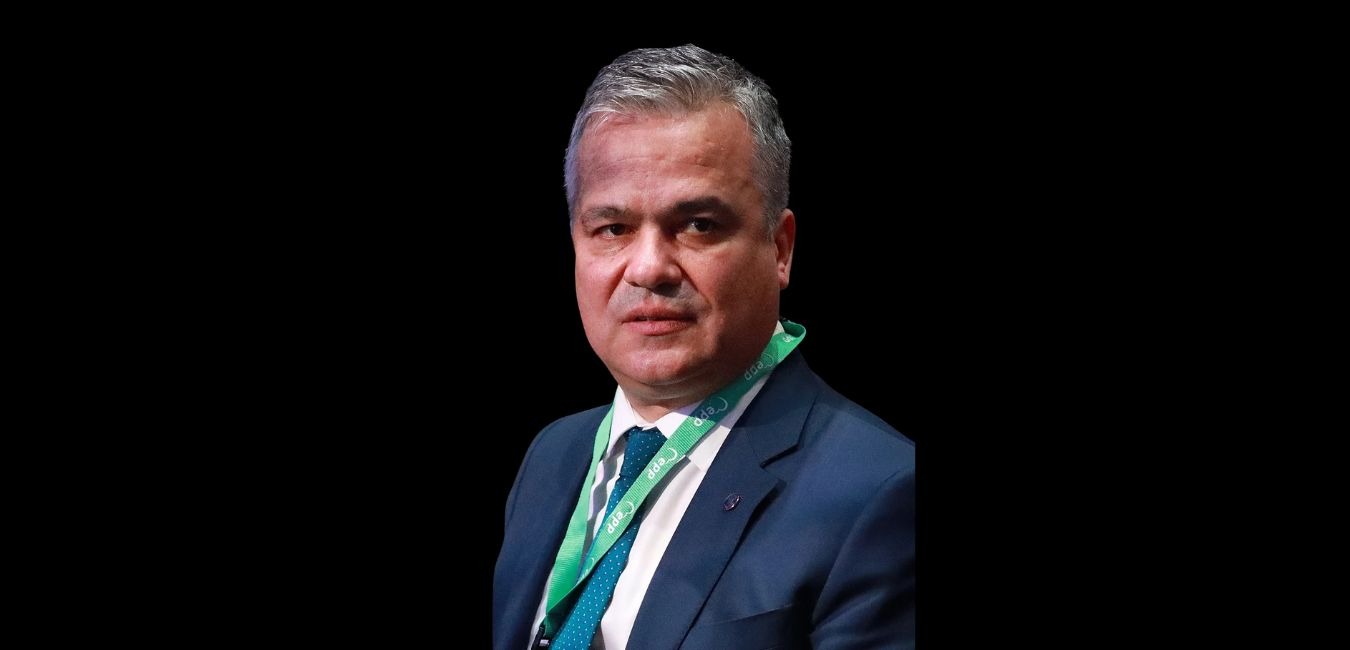
Romania’s prolonged political deadlock entered a new phase on Sunday morning, after Adrian Veștea was nominated to form a new government, following Eugen Tomac’s resignation from the mandate of prime minister-designate.
The development comes after days of tense negotiations in Bucharest, where Tomac failed to secure a clear parliamentary majority for his proposed executive. His nomination had been presented as a possible technocratic solution to the crisis, but the lack of support from key parliamentary parties quickly turned the formula into another fragile experiment.
Veștea’s nomination marks a shift back toward a more politically anchored attempt at governing. Unlike Tomac, whose proposed cabinet was framed around specialists and a certain distance from the main parliamentary parties, Veștea comes from within the National Liberal Party’s administrative structure and has a political career closely tied to local government, party organisation and county-level negotiations.
A former mayor of Râșnov, former president of the Brașov County Council, and former Minister of Development, Public Works and Administration, Adrian Veștea is no stranger to government. His political profile is built around administration, infrastructure, local networks and institutional management rather than ideological confrontation or public spectacle.
This is precisely why his nomination may be read as a return to political realism after the failed Tomac formula. Romania’s Parliament remains fragmented, and any new cabinet needs not only a programme but also a functioning majority. A technocratic list without party commitment proved insufficient. Veștea now has to test whether the parties are willing to accept a more conventional compromise.
For Romania’s business environment and institutional stakeholders, the key issue is no longer only who leads the government, but whether the next executive can secure enough support to act. The country faces pressure on public finances, European funding, administrative reforms and investor confidence. A government unable to pass legislation or defend its measures in Parliament would only extend the uncertainty.
Tomac’s resignation closed a short-lived attempt to form a cabinet outside the direct influence of the main parliamentary parties. Veștea’s nomination brings the crisis back into the hands of political negotiators. That may not be the most elegant solution, but it could prove more functional if the main parties decide that continued instability is more costly than compromise.
The next days will show whether Adrian Veștea can build the parliamentary support that Eugen Tomac could not. If he succeeds, Romania could move toward a new government after weeks of uncertainty. If he fails, the crisis will deepen further, increasing pressure on the president and parliamentary parties to identify yet another formula.